Create apps using the Dev Dashboard
The Dev Dashboard provides a simplified interface for creating apps and integrating them with the Shopify admin. This makes it the best choice for quick integrations, such as connecting an existing system to Shopify.
Creating an app for the app store? Build using Shopify CLI instead.
Creating an app for the app store? Build using Shopify CLI instead.
Anchor to What you'll learnWhat you'll learn
In this tutorial, you'll learn how to do the following tasks:
- Create and configure a new app using the Dev Dashboard
- Install your app on a dev store
- Authenticate your app to make API requests
Anchor to RequirementsRequirements
- You're a user with app development permissions.
Anchor to Step 1: Create a new appStep 1: Create a new app
You can create a new Shopify app right from your Dev Dashboard.
- From the Dev Dashboard, be sure you're on Apps in the left-panel navigation and select Create app in the top, right corner of the screen.
- Select Start from Dev Dashboard.
- Name your app, then select Create.
Anchor to Step 2: Create a versionStep 2: Create a version
Once you've created the app, you can create a version. A version is a snapshot of your app's current configuration, URLs, and settings. Your app must have at least one version before it can be installed on a store.
From the Versions page of your app in the Dev Dashboard, fill in the fields your app needs:
- App URL: Where Shopify loads your app. If your app isn't embedded in the Shopify admin, you can use the default
https://shopify.dev/apps/default-app-home. - Webhooks API version: Typically the newest version.
- Scopes: The data and features your app can access. Access to protected customer data or other sensitive information requires approval. Refer to access scopes.
Then select Release.
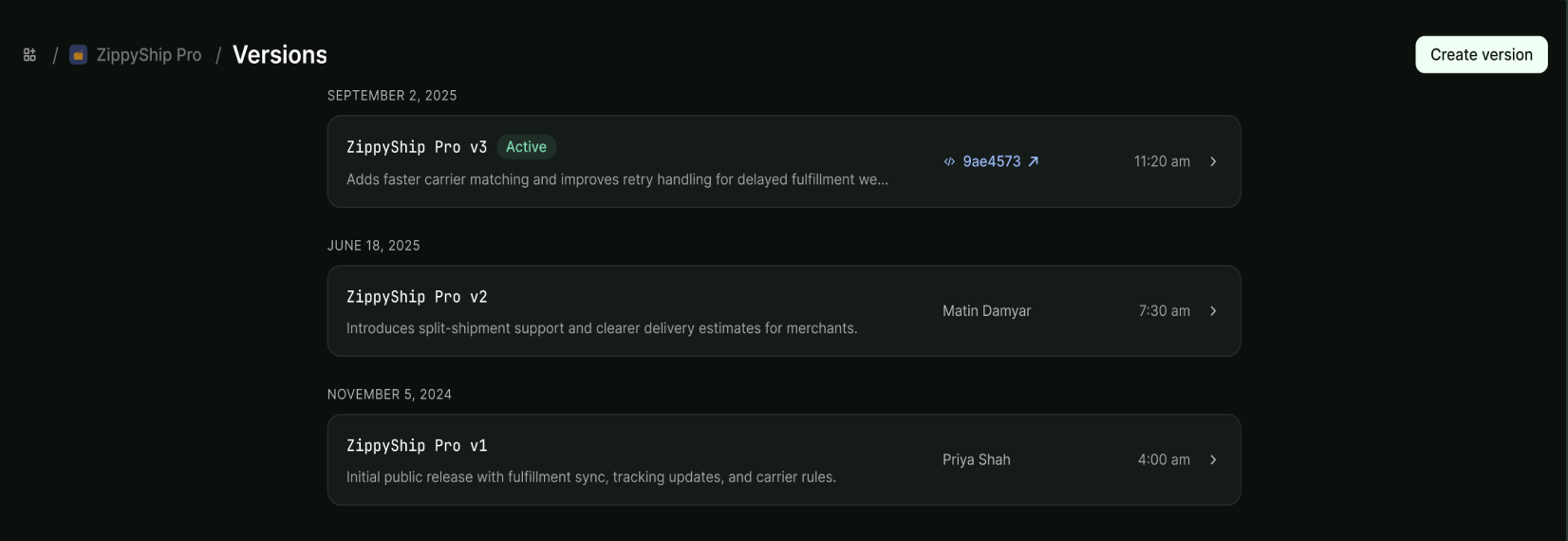
Versions enable you to track changes to your app configuration over time and roll back to previous configurations if needed.
When you update scopes in a new version of your app, updates aren't applied automatically to the stores your app is installed on. Merchants still need to manually approve the new scopes in the Shopify admin.
Anchor to Step 3: Install your appStep 3: Install your app
Complete the following steps to install your app on a store:
- Open your app and select Install app, at the top of the Installs card. The same action is in the three-dot menu (⋯) on the app's row in the Apps list.
- The install link opens the OAuth flow in a new tab. Select or create the store for your app.
- Select Install.
Your app is now installed. To start making API calls, you'll need to authenticate your app as described in the next step.
Anchor to Step 4: Authenticate your appStep 4: Authenticate your app
To make API requests, your app needs an access token. If your app is only used by stores in your own organization, you can use the client credentials grant:
- From your app in the Dev Dashboard, select App settings.
- Copy your Client ID and Client secret.
- Use these credentials to programmatically request an access token from Shopify's OAuth endpoint. Tokens expire after 24 hours, so your code can request a new one when needed.
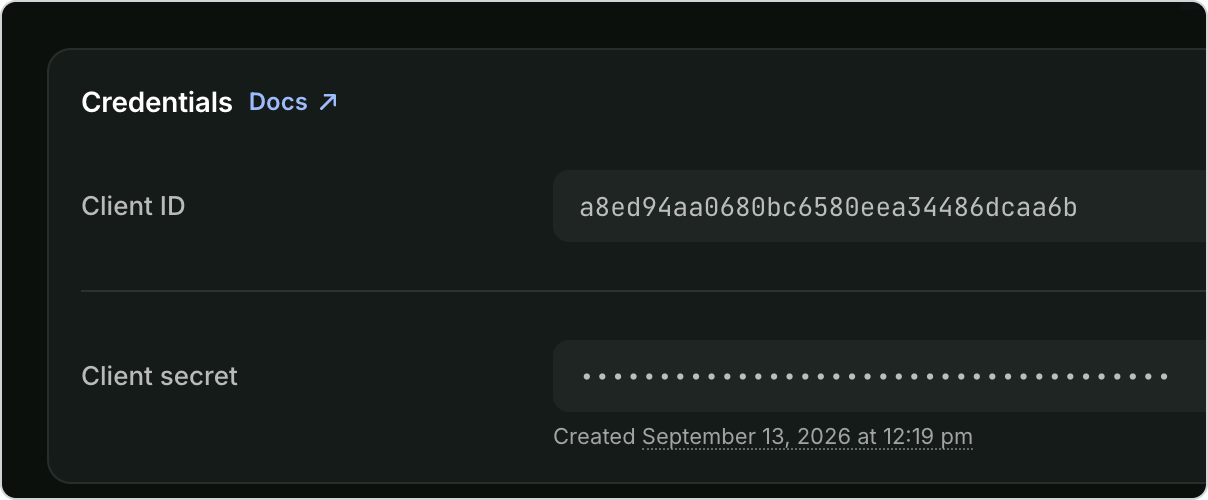
For code examples, response details, and troubleshooting, see Authenticate an app for stores in your organization.
If you're building with Shopify CLI, authentication is handled automatically.
If you're building with Shopify CLI, authentication is handled automatically.
Anchor to Next stepsNext steps
- Start building with the GraphQL Admin API to read and write store data.
- Configure Events and webhooks to receive real-time notifications about changes in the stores your app is installed on.
- Use the Dev Dashboard to monitor your app's performance once merchants are using it.