Fulfillment Constraints Function API
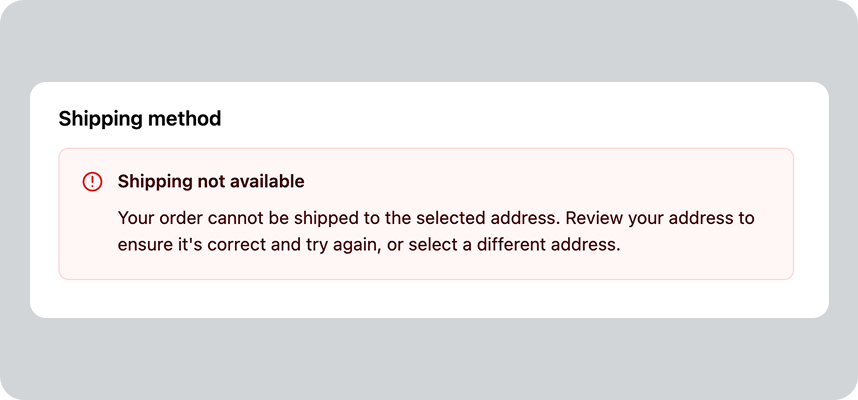
Fulfillment constraints refer to limitations or conditions that you apply when fulfilling orders. You can either specify a list of locations where cart items can be fulfilled from, or specify that cart items must be fulfilled from the same location. If the cart items with fulfillment constraints applied aren't available at the same location or any of the listed locations, then buyers won't see any shipping options at checkout. Instead, a message will show which items are out of stock, preventing the buyer from completing the purchase. To configure constraints for fulfilling orders, you can only use the Fulfillment Constraints Function API.
Shopify Functions enable you to customize Shopify's backend logic. The Fulfillment Constraints API integrates this logic into the checkout flow.
Use the API to customize fulfillment and delivery strategies for specific cart items, with associated data such as buyer identity, metafields, and location addresses.
You can activate a maximum of 25 fulfillment constraint functions on each store.
You can activate a maximum of 25 fulfillment constraint functions on each store.
Anchor to Use casesUse cases
- Fulfill specific items in a cart from the same location.
- Fulfill specific items in a cart from any of the locations in a list.
Function target
Checkout
- B2B: Supported
- Cart: Supported
- Checkout: Supported
- Create Order API: Supported
- Draft Order (Admin): Supported
- Draft Order (Checkout): Supported
- Order Edit (Checkout): Not supported
- Pre-order and Try Before You Buy: Not supported
- Shopify Admin: Supported
- Storefront Accelerated Checkout: Supported
- Subscription (Recurring Orders): Supported
- B2B: Supported
- Cart: Supported
- Checkout: Supported
- Create Order API: Supported
- Draft Order (Admin): Supported
- Draft Order (Checkout): Supported
- Order Edit (Checkout): Not supported
- Pre-order and Try Before You Buy: Not supported
- Shopify Admin: Supported
- Storefront Accelerated Checkout: Supported
- Subscription (Recurring Orders): Supported
Anchor to Getting startedGetting started
Scaffolding the function using Shopify CLI will automatically configure your TOML file. You can alter the default configuration to customize the way your function operates.
Terminal


Anchor to TargetsTargets
A target is an identifier in shopify.extension.toml that specifies where you're injecting code into Shopify Function
APIs, or other parts of the Shopify platform. Each target is composed of three to four namespaces. The name begins with
a broad Shopify context and ends with the behavior of the extensible element.
Anchor to Run targetRun target
cart.fulfillment-constraints.generate.run
The run target indicates which locations are used to fulfill specific items in a cart, either using Shopify data or hardcoded values. The target returns a list of operations that apply fulfillment constraints.
For example, you might use this to fulfill specific items in a cart from any of the locations in a list.
Shopify runs this function when delivery-related data in the cart changes, such as the cart lines or delivery address. If it already has a result for that data from the last 15 minutes, then it reuses that result instead. Learn more about delivery option caching.
Shopify runs this function when delivery-related data in the cart changes, such as the cart lines or delivery address. If it already has a result for that data from the last 15 minutes, then it reuses that result instead. Learn more about delivery option caching.
- Input
- Anchor to InputInputOBJECT
The
Inputobject is the complete GraphQL schema that your function can query as input to customize fulfillment constraints. Your function receives only the fields that you request in the input query. To optimize performance, we highly recommend that you request only the fields that your function requires.Hide fields
- Anchor to cartcart•Cart!non-null
The cart where the Function is running. A cart contains the merchandise that a customer intends to purchase and information about the customer, such as the customer's email address and phone number.
Show fields
- Anchor to attributeattribute•Attribute
The custom attributes associated with a cart to store additional information. Cart attributes allow you to collect specific information from customers on the Cart page, such as order notes, gift wrapping requests, or custom product details. Attributes are stored as key-value pairs.
Show arguments and fields
- •String
The key of the cart attribute to retrieve. For example,
.
Arguments
- •String!non-null
The key or name of the attribute. For example,
.- Anchor to valuevalue•String
The value of the attribute. For example,
"true".
Fields
- •
- Anchor to billingAddressbilling•
Address MailingAddress The billing address associated with the cart.
Show fields
- Anchor to address1address1•String
The first line of the address. Typically the street address or PO Box number.
- Anchor to address2address2•String
The second line of the address. Typically the number of the apartment, suite, or unit.
- Anchor to citycity•String
The name of the city, district, village, or town.
- Anchor to companycompany•String
The name of the customer's company or organization.
- Anchor to countryCodecountry•
Code CountryCode The two-letter code for the country of the address. For example, US.
Show enum values
AC, AD, AE, AF, AG, AI, AL, AM, AN, AO, AR, AT, AU, AW, AX, AZ, BA, BB, BD, BE, BF, BG, BH, BI, BJ, BL, BM, BN, BO, BQ, BR, BS, BT, BV, BW, BY, BZ, CA, CC, CD, CF, CG, CH, CI, CK, CL, CM, CN, CO, CR, CU, CV, CW, CX, CY, CZ, DE, DJ, DK, DM, DO, DZ, EC, EE, EG, EH, ER, ES, ET, FI, FJ, FK, FO, FR, GA, GB, GD, GE, GF, GG, GH, GI, GL, GM, GN, GP, GQ, GR, GS, GT, GW, GY, HK, HM, HN, HR, HT, HU, ID, IE, IL, IM, IN, IO, IQ, IR, IS, IT, JE, JM, JO, JP, KE, KG, KH, KI, KM, KN, KP, KR, KW, KY, KZ, LA, LB, LC, LI, LK, LR, LS, LT, LU, LV, LY, MA, MC, MD, ME, MF, MG, MK, ML, MM, MN, MO, MQ, MR, MS, MT, MU, MV, MW, MX, MY, MZ, NA, NC, NE, NF, NG, NI, NL, NO, NP, NR, NU, NZ, OM, PA, PE, PF, PG, PH, PK, PL, PM, PN, PS, PT, PY, QA, RE, RO, RS, RU, RW, SA, SB, SC, SD, SE, SG, SH, SI, SJ, SK, SL, SM, SN, SO, SR, SS, ST, SV, SX, SY, SZ, TA, TC, TD, TF, TG, TH, TJ, TK, TL, TM, TN, TO, TR, TT, TV, TW, TZ, UA, UG, UM, US, UY, UZ, VA, VC, VE, VG, VN, VU, WF, WS, XK, YE, YT, ZA, ZM, ZW, ZZ- Anchor to firstNamefirst•
Name String The first name of the customer.
- Anchor to lastNamelast•
Name String The last name of the customer.
- Anchor to latitudelatitude•Float
The approximate latitude of the address.
- Anchor to longitudelongitude•Float
The approximate longitude of the address.
- Anchor to namename•String
The full name of the customer, based on firstName and lastName.
- Anchor to phonephone•String
A unique phone number for the customer. Formatted using E.164 standard. For example, +16135551111.
- Anchor to provinceCodeprovince•
Code String The alphanumeric code for the region. For example, ON.
- •String
The zip or postal code of the address.
- Anchor to marketmarket•MarketDeprecated
Show fields
- Anchor to handlehandle•Handle!non-null
A human-readable unique string for the market automatically generated from its title.
- •ID!non-null
A globally-unique identifier.
- Anchor to metafieldmetafield•Metafield
A custom field that stores additional information about a Shopify resource, such as products, orders, and many more. Using metafields with Shopify Functions enables you to customize the checkout experience.
Show arguments and fields
- Anchor to namespacenamespace•String
A category that organizes a group of metafields. Namespaces are used to prevent naming conflicts between different apps or different parts of the same app. If omitted, then the app-reserved namespace is used.
- •String!required
The unique identifier for the metafield within its namespace. A metafield is composed of a namespace and a key, in the format
namespace.key.
Arguments
- Anchor to jsonValuejson•
Value JSON!non-null The data that's stored in the metafield, using JSON format.
- Anchor to typetype•String!non-null
The type of data that the metafield stores in the
valuefield.- Anchor to valuevalue•String!non-null
The data that's stored in the metafield. The data is always stored as a string, regardless of the metafield's type.
Fields
- Anchor to regionsregions•[Market
Region!]! non-null A geographic region which comprises a market.
Show fields
- Anchor to namename•String
The name of the region in the language of the current localization.
- Anchor to buyerIdentitybuyer•
Identity BuyerIdentity Information about the customer that's interacting with the cart. It includes details such as the customer's email and phone number, and the total amount of money the customer has spent in the store. This information helps personalize the checkout experience and ensures that accurate pricing and delivery options are displayed to customers.
Show fields
- Anchor to customercustomer•Customer
The customer that's interacting with the cart.
Show fields
- Anchor to amountSpentamount•
Spent MoneyV2! non-null The total amount that the customer has spent on orders. The amount is converted from the shop's currency to the currency of the cart using a market rate.
Show fields
- Anchor to amountamount•Decimal!non-null
A monetary value in decimal format, allowing for precise representation of cents or fractional currency. For example, 12.99.
- Anchor to currencyCodecurrency•
Code CurrencyCode! non-null The three-letter currency code that represents a world currency used in a store. Currency codes include standard standard ISO 4217 codes, legacy codes, and non-standard codes. For example, USD.
Show enum values
AED, AFN, ALL, AMD, AOA, ARS, AUD, AWG, AZN, BAM, BBD, BDT, BGN, BHD, BIF, BMD, BND, BOB, BRL, BSD, BTN, BWP, BYN, BZD, CAD, CDF, CHF, CLP, CNY, COP, CRC, CVE, CZK, DJF, DKK, DOP, DZD, EGP, ERN, ETB, EUR, FJD, FKP, GBP, GEL, GHS, GIP, GMD, GNF, GTQ, GYD, HKD, HNL, HRK, HTG, HUF, IDR, ILS, INR, IQD, IRR, ISK, JEP, JMD, JOD, JPY, KES, KGS, KHR, KID, KMF, KRW, KWD, KYD, KZT, LAK, LBP, LKR, LRD, LSL, LTL, LVL, LYD, MAD, MDL, MGA, MKD, MMK, MNT, MOP, MRU, MUR, MVR, MWK, MXN, MYR, MZN, NAD, NGN, NIO, NOK, NPR, NZD, OMR, PAB, PEN, PGK, PHP, PKR, PLN, PYG, QAR, RON, RSD, RUB, RWF, SAR, SBD, SCR, SDG, SEK, SGD, SHP, SLL, SOS, SRD, SSP, STN, SYP, SZL, THB, TJS, TMT, TND, TOP, TRY, TTD, TWD, TZS, UAH, UGX, USD, USDC, UYU, UZS, VED, VES, VND, VUV, WST, XAF, XCD, XCG, XOF, XPF, XXX, YER, ZAR, ZMW, ANG, BYR, STD, VEF
- Anchor to displayNamedisplay•
Name String!non-null The full name of the customer, based on the values for
and. Ifandaren't specified, then the value is the customer's email address. If the email address isn't specified, then the value is the customer's phone number.- Anchor to emailemail•String
The customer's email address.
- Anchor to firstNamefirst•
Name String The customer's first name.
- Anchor to hasAnyTaghas•
Any Tag Boolean!non-null Whether the customer is associated with any of the specified tags. The customer must have at least one tag from the list to return
true.Show arguments
- •[String!]!requiredDefault:[]
A comma-separated list of searchable keywords that are associated with the customer. For example,
"VIP, Gold"returns customers with either theVIPorGoldtag.
Arguments
- •
- Anchor to hasTagshas•
Tags [HasTag Response!]! non-null Whether the customer is associated with the specified tags.
Show arguments and fields
- •[String!]!requiredDefault:[]
A comma-separated list of searchable keywords that are associated with the customer. For example,
"VIP, Gold"returns customers with both theVIPandGoldtags.
Arguments
- Anchor to hasTaghas•
Tag Boolean!non-null Whether the Shopify resource has the tag.
- •String!non-null
A searchable keyword that's associated with a Shopify resource, such as a product or customer. For example, a merchant might apply the
sportsandsummertags to products that are associated with sportswear for summer.
Fields
- •
- •ID!non-null
A globally-unique ID for the customer.
- Anchor to lastNamelast•
Name String The customer's last name.
- Anchor to metafieldmetafield•Metafield
A custom field that stores additional information about a Shopify resource, such as products, orders, and many more. Using metafields with Shopify Functions enables you to customize the checkout experience.
Show arguments and fields
- Anchor to namespacenamespace•String
A category that organizes a group of metafields. Namespaces are used to prevent naming conflicts between different apps or different parts of the same app. If omitted, then the app-reserved namespace is used.
- •String!required
The unique identifier for the metafield within its namespace. A metafield is composed of a namespace and a key, in the format
namespace.key.
Arguments
- Anchor to jsonValuejson•
Value JSON!non-null The data that's stored in the metafield, using JSON format.
- Anchor to typetype•String!non-null
The type of data that the metafield stores in the
valuefield.- Anchor to valuevalue•String!non-null
The data that's stored in the metafield. The data is always stored as a string, regardless of the metafield's type.
Fields
- Anchor to numberOfOrdersnumber•
Of Orders Int!non-null The total number of orders that the customer has made at the store.
- Anchor to emailemail•String
The email address of the customer that's interacting with the cart.
- Anchor to isAuthenticatedis•
Authenticated Boolean!non-null Whether the customer is authenticated through their customer account.
- Anchor to phonephone•String
The phone number of the customer that's interacting with the cart.
- Anchor to purchasingCompanypurchasing•
Company PurchasingCompany The company of a B2B customer that's interacting with the cart. Used to manage and track purchases made by businesses rather than individual customers.
Show fields
- Anchor to companycompany•Company!non-null
The company associated to the order or draft order.
Show fields
- Anchor to createdAtcreated•
At DateTime! non-null The date and time (ISO 8601 format) at which the company was created in Shopify.
- Anchor to externalIdexternal•
Id String A unique externally-supplied ID for the company.
- •ID!non-null
The ID of the company.
- Anchor to metafieldmetafield•Metafield
A custom field that stores additional information about a Shopify resource, such as products, orders, and many more. Using metafields with Shopify Functions enables you to customize the checkout experience.
Show arguments and fields
- Anchor to namespacenamespace•String
A category that organizes a group of metafields. Namespaces are used to prevent naming conflicts between different apps or different parts of the same app. If omitted, then the app-reserved namespace is used.
- •String!required
The unique identifier for the metafield within its namespace. A metafield is composed of a namespace and a key, in the format
namespace.key.
Arguments
- Anchor to jsonValuejson•
Value JSON!non-null The data that's stored in the metafield, using JSON format.
- Anchor to typetype•String!non-null
The type of data that the metafield stores in the
valuefield.- Anchor to valuevalue•String!non-null
The data that's stored in the metafield. The data is always stored as a string, regardless of the metafield's type.
Fields
- Anchor to namename•String!non-null
The name of the company.
- Anchor to updatedAtupdated•
At DateTime! non-null The date and time (ISO 8601 format) at which the company was last modified.
- Anchor to contactcontact•Company
Contact The company contact associated to the order or draft order.
Show fields
- Anchor to createdAtcreated•
At DateTime! non-null The date and time (ISO 8601 format) at which the company contact was created in Shopify.
- •ID!non-null
The ID of the company.
- Anchor to localelocale•String
The company contact's locale (language).
- Anchor to titletitle•String
The company contact's job title.
- Anchor to updatedAtupdated•
At DateTime! non-null The date and time (ISO 8601 format) at which the company contact was last modified.
- Anchor to locationlocation•Company
Location! non-null The company location associated to the order or draft order.
Show fields
- Anchor to createdAtcreated•
At DateTime! non-null The date and time (ISO 8601 format) at which the company location was created in Shopify.
- Anchor to externalIdexternal•
Id String A unique externally-supplied ID for the company.
- •ID!non-null
The ID of the company.
- Anchor to localelocale•String
The preferred locale of the company location.
- Anchor to metafieldmetafield•Metafield
A custom field that stores additional information about a Shopify resource, such as products, orders, and many more. Using metafields with Shopify Functions enables you to customize the checkout experience.
Show arguments and fields
- Anchor to namespacenamespace•String
A category that organizes a group of metafields. Namespaces are used to prevent naming conflicts between different apps or different parts of the same app. If omitted, then the app-reserved namespace is used.
- •String!required
The unique identifier for the metafield within its namespace. A metafield is composed of a namespace and a key, in the format
namespace.key.
Arguments
- Anchor to jsonValuejson•
Value JSON!non-null The data that's stored in the metafield, using JSON format.
- Anchor to typetype•String!non-null
The type of data that the metafield stores in the
valuefield.- Anchor to valuevalue•String!non-null
The data that's stored in the metafield. The data is always stored as a string, regardless of the metafield's type.
Fields
- Anchor to namename•String!non-null
The name of the company location.
- Anchor to ordersCountorders•
Count Int!non-null The number of orders placed at this company location.
- Anchor to totalSpenttotal•
Spent MoneyV2! non-null The total amount spent at this company location.
Show fields
- Anchor to amountamount•Decimal!non-null
A monetary value in decimal format, allowing for precise representation of cents or fractional currency. For example, 12.99.
- Anchor to currencyCodecurrency•
Code CurrencyCode! non-null The three-letter currency code that represents a world currency used in a store. Currency codes include standard standard ISO 4217 codes, legacy codes, and non-standard codes. For example, USD.
Show enum values
AED, AFN, ALL, AMD, AOA, ARS, AUD, AWG, AZN, BAM, BBD, BDT, BGN, BHD, BIF, BMD, BND, BOB, BRL, BSD, BTN, BWP, BYN, BZD, CAD, CDF, CHF, CLP, CNY, COP, CRC, CVE, CZK, DJF, DKK, DOP, DZD, EGP, ERN, ETB, EUR, FJD, FKP, GBP, GEL, GHS, GIP, GMD, GNF, GTQ, GYD, HKD, HNL, HRK, HTG, HUF, IDR, ILS, INR, IQD, IRR, ISK, JEP, JMD, JOD, JPY, KES, KGS, KHR, KID, KMF, KRW, KWD, KYD, KZT, LAK, LBP, LKR, LRD, LSL, LTL, LVL, LYD, MAD, MDL, MGA, MKD, MMK, MNT, MOP, MRU, MUR, MVR, MWK, MXN, MYR, MZN, NAD, NGN, NIO, NOK, NPR, NZD, OMR, PAB, PEN, PGK, PHP, PKR, PLN, PYG, QAR, RON, RSD, RUB, RWF, SAR, SBD, SCR, SDG, SEK, SGD, SHP, SLL, SOS, SRD, SSP, STN, SYP, SZL, THB, TJS, TMT, TND, TOP, TRY, TTD, TWD, TZS, UAH, UGX, USD, USDC, UYU, UZS, VED, VES, VND, VUV, WST, XAF, XCD, XCG, XOF, XPF, XXX, YER, ZAR, ZMW, ANG, BYR, STD, VEF
- Anchor to updatedAtupdated•
At DateTime! non-null The date and time (ISO 8601 format) at which the company location was last modified.
- Anchor to costcost•Cart
Cost! non-null A breakdown of the costs that the customer will pay at checkout. It includes the total amount, the subtotal before taxes and duties, the tax amount, and duty charges.
Show fields
- Anchor to subtotalAmountsubtotal•
Amount MoneyV2! non-null The amount, before taxes and cart-level discounts, for the customer to pay.
Show fields
- Anchor to amountamount•Decimal!non-null
A monetary value in decimal format, allowing for precise representation of cents or fractional currency. For example, 12.99.
- Anchor to currencyCodecurrency•
Code CurrencyCode! non-null The three-letter currency code that represents a world currency used in a store. Currency codes include standard standard ISO 4217 codes, legacy codes, and non-standard codes. For example, USD.
Show enum values
AED, AFN, ALL, AMD, AOA, ARS, AUD, AWG, AZN, BAM, BBD, BDT, BGN, BHD, BIF, BMD, BND, BOB, BRL, BSD, BTN, BWP, BYN, BZD, CAD, CDF, CHF, CLP, CNY, COP, CRC, CVE, CZK, DJF, DKK, DOP, DZD, EGP, ERN, ETB, EUR, FJD, FKP, GBP, GEL, GHS, GIP, GMD, GNF, GTQ, GYD, HKD, HNL, HRK, HTG, HUF, IDR, ILS, INR, IQD, IRR, ISK, JEP, JMD, JOD, JPY, KES, KGS, KHR, KID, KMF, KRW, KWD, KYD, KZT, LAK, LBP, LKR, LRD, LSL, LTL, LVL, LYD, MAD, MDL, MGA, MKD, MMK, MNT, MOP, MRU, MUR, MVR, MWK, MXN, MYR, MZN, NAD, NGN, NIO, NOK, NPR, NZD, OMR, PAB, PEN, PGK, PHP, PKR, PLN, PYG, QAR, RON, RSD, RUB, RWF, SAR, SBD, SCR, SDG, SEK, SGD, SHP, SLL, SOS, SRD, SSP, STN, SYP, SZL, THB, TJS, TMT, TND, TOP, TRY, TTD, TWD, TZS, UAH, UGX, USD, USDC, UYU, UZS, VED, VES, VND, VUV, WST, XAF, XCD, XCG, XOF, XPF, XXX, YER, ZAR, ZMW, ANG, BYR, STD, VEF
- Anchor to totalAmounttotal•
Amount MoneyV2! non-null The total amount for the customer to pay at checkout.
Show fields
- Anchor to amountamount•Decimal!non-null
A monetary value in decimal format, allowing for precise representation of cents or fractional currency. For example, 12.99.
- Anchor to currencyCodecurrency•
Code CurrencyCode! non-null The three-letter currency code that represents a world currency used in a store. Currency codes include standard standard ISO 4217 codes, legacy codes, and non-standard codes. For example, USD.
Show enum values
AED, AFN, ALL, AMD, AOA, ARS, AUD, AWG, AZN, BAM, BBD, BDT, BGN, BHD, BIF, BMD, BND, BOB, BRL, BSD, BTN, BWP, BYN, BZD, CAD, CDF, CHF, CLP, CNY, COP, CRC, CVE, CZK, DJF, DKK, DOP, DZD, EGP, ERN, ETB, EUR, FJD, FKP, GBP, GEL, GHS, GIP, GMD, GNF, GTQ, GYD, HKD, HNL, HRK, HTG, HUF, IDR, ILS, INR, IQD, IRR, ISK, JEP, JMD, JOD, JPY, KES, KGS, KHR, KID, KMF, KRW, KWD, KYD, KZT, LAK, LBP, LKR, LRD, LSL, LTL, LVL, LYD, MAD, MDL, MGA, MKD, MMK, MNT, MOP, MRU, MUR, MVR, MWK, MXN, MYR, MZN, NAD, NGN, NIO, NOK, NPR, NZD, OMR, PAB, PEN, PGK, PHP, PKR, PLN, PYG, QAR, RON, RSD, RUB, RWF, SAR, SBD, SCR, SDG, SEK, SGD, SHP, SLL, SOS, SRD, SSP, STN, SYP, SZL, THB, TJS, TMT, TND, TOP, TRY, TTD, TWD, TZS, UAH, UGX, USD, USDC, UYU, UZS, VED, VES, VND, VUV, WST, XAF, XCD, XCG, XOF, XPF, XXX, YER, ZAR, ZMW, ANG, BYR, STD, VEF
- Anchor to totalDutyAmounttotal•
Duty Amount MoneyV2 The duty charges for a customer to pay at checkout.
Show fields
- Anchor to amountamount•Decimal!non-null
A monetary value in decimal format, allowing for precise representation of cents or fractional currency. For example, 12.99.
- Anchor to currencyCodecurrency•
Code CurrencyCode! non-null The three-letter currency code that represents a world currency used in a store. Currency codes include standard standard ISO 4217 codes, legacy codes, and non-standard codes. For example, USD.
Show enum values
AED, AFN, ALL, AMD, AOA, ARS, AUD, AWG, AZN, BAM, BBD, BDT, BGN, BHD, BIF, BMD, BND, BOB, BRL, BSD, BTN, BWP, BYN, BZD, CAD, CDF, CHF, CLP, CNY, COP, CRC, CVE, CZK, DJF, DKK, DOP, DZD, EGP, ERN, ETB, EUR, FJD, FKP, GBP, GEL, GHS, GIP, GMD, GNF, GTQ, GYD, HKD, HNL, HRK, HTG, HUF, IDR, ILS, INR, IQD, IRR, ISK, JEP, JMD, JOD, JPY, KES, KGS, KHR, KID, KMF, KRW, KWD, KYD, KZT, LAK, LBP, LKR, LRD, LSL, LTL, LVL, LYD, MAD, MDL, MGA, MKD, MMK, MNT, MOP, MRU, MUR, MVR, MWK, MXN, MYR, MZN, NAD, NGN, NIO, NOK, NPR, NZD, OMR, PAB, PEN, PGK, PHP, PKR, PLN, PYG, QAR, RON, RSD, RUB, RWF, SAR, SBD, SCR, SDG, SEK, SGD, SHP, SLL, SOS, SRD, SSP, STN, SYP, SZL, THB, TJS, TMT, TND, TOP, TRY, TTD, TWD, TZS, UAH, UGX, USD, USDC, UYU, UZS, VED, VES, VND, VUV, WST, XAF, XCD, XCG, XOF, XPF, XXX, YER, ZAR, ZMW, ANG, BYR, STD, VEF
- Anchor to totalTaxAmounttotal•
Tax Amount MoneyV2 The total tax amount for the customer to pay at checkout.
Show fields
- Anchor to amountamount•Decimal!non-null
A monetary value in decimal format, allowing for precise representation of cents or fractional currency. For example, 12.99.
- Anchor to currencyCodecurrency•
Code CurrencyCode! non-null The three-letter currency code that represents a world currency used in a store. Currency codes include standard standard ISO 4217 codes, legacy codes, and non-standard codes. For example, USD.
Show enum values
AED, AFN, ALL, AMD, AOA, ARS, AUD, AWG, AZN, BAM, BBD, BDT, BGN, BHD, BIF, BMD, BND, BOB, BRL, BSD, BTN, BWP, BYN, BZD, CAD, CDF, CHF, CLP, CNY, COP, CRC, CVE, CZK, DJF, DKK, DOP, DZD, EGP, ERN, ETB, EUR, FJD, FKP, GBP, GEL, GHS, GIP, GMD, GNF, GTQ, GYD, HKD, HNL, HRK, HTG, HUF, IDR, ILS, INR, IQD, IRR, ISK, JEP, JMD, JOD, JPY, KES, KGS, KHR, KID, KMF, KRW, KWD, KYD, KZT, LAK, LBP, LKR, LRD, LSL, LTL, LVL, LYD, MAD, MDL, MGA, MKD, MMK, MNT, MOP, MRU, MUR, MVR, MWK, MXN, MYR, MZN, NAD, NGN, NIO, NOK, NPR, NZD, OMR, PAB, PEN, PGK, PHP, PKR, PLN, PYG, QAR, RON, RSD, RUB, RWF, SAR, SBD, SCR, SDG, SEK, SGD, SHP, SLL, SOS, SRD, SSP, STN, SYP, SZL, THB, TJS, TMT, TND, TOP, TRY, TTD, TWD, TZS, UAH, UGX, USD, USDC, UYU, UZS, VED, VES, VND, VUV, WST, XAF, XCD, XCG, XOF, XPF, XXX, YER, ZAR, ZMW, ANG, BYR, STD, VEF
- Anchor to deliverableLinesdeliverable•
Lines [DeliverableCart Line!]! non-null The items in a cart that are eligible for fulfillment and can be delivered to the customer.
Show fields
- Anchor to attributeattribute•Attribute
The custom attributes associated with a cart to store additional information. Cart attributes allow you to collect specific information from customers on the Cart page, such as order notes, gift wrapping requests, or custom product details. Attributes are stored as key-value pairs.
Cart line attributes are equivalent to the
object in Liquid.Show arguments and fields
- •String
The key of the cart attribute to retrieve. For example,
.
Arguments
- •String!non-null
The key or name of the attribute. For example,
.- Anchor to valuevalue•String
The value of the attribute. For example,
"true".
Fields
- •
- •ID!non-null
The ID of the cart line.
- Anchor to merchandisemerchandise•Merchandise!non-null
The item that the customer intends to purchase.
Show union types
- Anchor to CustomProduct•OBJECTCustom
Product A custom product represents a product that doesn't map to Shopify's standard product categories. For example, you can use a custom product to manage gift cards, shipping requirements, localized product information, or weight measurements and conversions.
Show fields
- Anchor to isGiftCardis•
Gift Card Boolean!non-null Whether the merchandise is a gift card.
- Anchor to requiresShippingrequires•
Shipping Boolean!non-null Whether the item needs to be shipped to the customer. For example, a digital gift card doesn't need to be shipped, but a t-shirt does need to be shipped.
- Anchor to titletitle•String!non-null
The localized name for the product that displays to customers. The title is used to construct the product's handle, which is a unique, human-readable string of the product's title. For example, if a product is titled "Black Sunglasses", then the handle is
black-sunglasses.- Anchor to weightweight•Float
The product variant's weight, in the system of measurement set in the
field.- Anchor to weightUnitweight•
Unit WeightUnit! non-null The unit of measurement for weight.
Show enum values
GRAMS, KILOGRAMS, OUNCES, POUNDS
- Anchor to ProductVariant•OBJECTProduct
Variant A specific version of a product that comes in more than one option, such as size or color. For example, if a merchant sells t-shirts with options for size and color, then a small, blue t-shirt would be one product variant and a large, blue t-shirt would be another.
Show fields
- •ID!non-null
A globally-unique ID for the product variant.
- Anchor to metafieldmetafield•Metafield
A custom field that stores additional information about a Shopify resource, such as products, orders, and many more. Using metafields with Shopify Functions enables you to customize the checkout experience.
Show arguments and fields
- Anchor to namespacenamespace•String
A category that organizes a group of metafields. Namespaces are used to prevent naming conflicts between different apps or different parts of the same app. If omitted, then the app-reserved namespace is used.
- •String!required
The unique identifier for the metafield within its namespace. A metafield is composed of a namespace and a key, in the format
namespace.key.
Arguments
- Anchor to jsonValuejson•
Value JSON!non-null The data that's stored in the metafield, using JSON format.
- Anchor to typetype•String!non-null
The type of data that the metafield stores in the
valuefield.- Anchor to valuevalue•String!non-null
The data that's stored in the metafield. The data is always stored as a string, regardless of the metafield's type.
Fields
- Anchor to productproduct•Product!non-null
The product associated with the product variant. For example, if a merchant sells t-shirts with options for size and color, then a small, blue t-shirt would be one product variant and a large, blue t-shirt would be another. The product associated with the product variant would be the t-shirt itself.
Show fields
- Anchor to handlehandle•Handle!non-null
A unique, human-readable string of the product's title. A handle can contain letters, hyphens (
-), and numbers, but not spaces. The handle is used in the online store URL for the product. For example, if a product is titled "Black Sunglasses", then the handle isblack-sunglasses.- Anchor to hasAnyTaghas•
Any Tag Boolean!non-null Whether the product is associated with any of the specified tags. The product must have at least one tag from the list to return
true.Show arguments
- •[String!]!requiredDefault:[]
A comma-separated list of searchable keywords that are associated with the product. For example,
"sports, summer"returns products with either thesportsorsummertag.
Arguments
- •
- Anchor to hasTagshas•
Tags [HasTag Response!]! non-null Whether the product is associated with the specified tags.
Show arguments and fields
- •[String!]!requiredDefault:[]
A comma-separated list of searchable keywords that are associated with the product. For example,
"sports, summer"returns products with both thesportsandsummertags.
Arguments
- Anchor to hasTaghas•
Tag Boolean!non-null Whether the Shopify resource has the tag.
- •String!non-null
A searchable keyword that's associated with a Shopify resource, such as a product or customer. For example, a merchant might apply the
sportsandsummertags to products that are associated with sportswear for summer.
Fields
- •
- •ID!non-null
A globally-unique ID for the product.
- Anchor to inAnyCollectionin•
Any Collection Boolean!non-null Whether the product is in any of the specified collections. The product must be in at least one collection from the list to return
true.A collection is a group of products that can be displayed in online stores and other sales channels in categories, which makes it easy for customers to find them. For example, an athletics store might create different collections for running attire and accessories.
Show arguments
- •[ID!]!requiredDefault:[]
A comma-separated list of globally-unique collection IDs that are associated with the product. For example,
,.
Arguments
- •
- Anchor to inCollectionsin•
Collections [CollectionMembership!]! non-null Whether the product is in the specified collections. The product must be in all of the collections in the list to return
true.A collection is a group of products that can be displayed in online stores and other sales channels in categories, which makes it easy for customers to find them. For example, an athletics store might create different collections for running attire and accessories.
Show arguments and fields
- •[ID!]!requiredDefault:[]
A comma-separated list of globally-unique collection IDs that are associated with the product. For example,
,.
Arguments
- Anchor to collectionIdcollection•
Id ID!non-null A globally-unique ID for the collection.
- Anchor to isMemberis•
Member Boolean!non-null Whether the product is in the specified collection.
Fields
- •
- Anchor to isGiftCardis•
Gift Card Boolean!non-null Whether the product is a gift card.
- Anchor to metafieldmetafield•Metafield
A custom field that stores additional information about a Shopify resource, such as products, orders, and many more. Using metafields with Shopify Functions enables you to customize the checkout experience.
Show arguments and fields
- Anchor to namespacenamespace•String
A category that organizes a group of metafields. Namespaces are used to prevent naming conflicts between different apps or different parts of the same app. If omitted, then the app-reserved namespace is used.
- •String!required
The unique identifier for the metafield within its namespace. A metafield is composed of a namespace and a key, in the format
namespace.key.
Arguments
- Anchor to jsonValuejson•
Value JSON!non-null The data that's stored in the metafield, using JSON format.
- Anchor to typetype•String!non-null
The type of data that the metafield stores in the
valuefield.- Anchor to valuevalue•String!non-null
The data that's stored in the metafield. The data is always stored as a string, regardless of the metafield's type.
Fields
- Anchor to productTypeproduct•
Type String A custom category for a product. Product types allow merchants to define categories other than the ones available in Shopify's standard product categories.
- Anchor to titletitle•String!non-null
The localized name for the product that displays to customers. The title is used to construct the product's handle, which is a unique, human-readable string of the product's title. For example, if a product is titled "Black Sunglasses", then the handle is
black-sunglasses.- Anchor to vendorvendor•String
The name of the product's vendor.
- Anchor to requiresShippingrequires•
Shipping Boolean!non-null Whether the item needs to be shipped to the customer. For example, a digital gift card doesn't need to be shipped, but a t-shirt does need to be shipped.
- •String
A case-sensitive identifier for the product variant in the merchant's store. For example,
"BBC-1". A product variant must have a SKU to be connected to a fulfillment service.- Anchor to titletitle•String
The localized name for the product variant that displays to customers.
- Anchor to weightweight•Float
The product variant's weight, in the system of measurement set in the
field.- Anchor to weightUnitweight•
Unit WeightUnit! non-null The unit of measurement for weight.
Show enum values
GRAMS, KILOGRAMS, OUNCES, POUNDS
- •
- Anchor to quantityquantity•Int!non-null
The quantity of the item that the customer intends to purchase.
- Anchor to deliveryGroupsdelivery•
Groups [CartDelivery Group!]! non-null A collection of items that are grouped by shared delivery characteristics. Delivery groups streamline fulfillment by organizing items that can be shipped together, based on the customer's shipping address. For example, if a customer orders a t-shirt and a pair of shoes that can be shipped together, then the items are included in the same delivery group.
In the Order Discount and Product Discount legacy APIs, the
input is always an empty array. This means you can't access delivery groups when creating Order Discount or Product Discount Functions. If you need to apply discounts to shipping costs, then use the Discount Function API instead.Show fields
- Anchor to cartLinescart•
Lines [CartLine!]! non-null Information about items in a cart that a customer intends to purchase. A cart line is an entry in the customer's cart that represents a single unit of a product variant. For example, if a customer adds two different sizes of the same t-shirt to their cart, then each size is represented as a separate cart line.
Show fields
- Anchor to attributeattribute•Attribute
The custom attributes associated with a cart to store additional information. Cart attributes allow you to collect specific information from customers on the Cart page, such as order notes, gift wrapping requests, or custom product details. Attributes are stored as key-value pairs.
Cart line attributes are equivalent to the
object in Liquid.Show arguments and fields
- •String
The key of the cart attribute to retrieve. For example,
.
Arguments
- •String!non-null
The key or name of the attribute. For example,
.- Anchor to valuevalue•String
The value of the attribute. For example,
"true".
Fields
- •
- Anchor to costcost•Cart
Line Cost! non-null The cost of an item in a cart that the customer intends to purchase. Cart lines are entries in the customer's cart that represent a single unit of a product variant. For example, if a customer adds two different sizes of the same t-shirt to their cart, then each size is represented as a separate cart line.
Show fields
- Anchor to amountPerQuantityamount•
Per Quantity MoneyV2! non-null The cost of a single unit. For example, if a customer purchases three units of a product that are priced at $10 each, then the
is $10.Show fields
- Anchor to amountamount•Decimal!non-null
A monetary value in decimal format, allowing for precise representation of cents or fractional currency. For example, 12.99.
- Anchor to currencyCodecurrency•
Code CurrencyCode! non-null The three-letter currency code that represents a world currency used in a store. Currency codes include standard standard ISO 4217 codes, legacy codes, and non-standard codes. For example, USD.
Show enum values
AED, AFN, ALL, AMD, AOA, ARS, AUD, AWG, AZN, BAM, BBD, BDT, BGN, BHD, BIF, BMD, BND, BOB, BRL, BSD, BTN, BWP, BYN, BZD, CAD, CDF, CHF, CLP, CNY, COP, CRC, CVE, CZK, DJF, DKK, DOP, DZD, EGP, ERN, ETB, EUR, FJD, FKP, GBP, GEL, GHS, GIP, GMD, GNF, GTQ, GYD, HKD, HNL, HRK, HTG, HUF, IDR, ILS, INR, IQD, IRR, ISK, JEP, JMD, JOD, JPY, KES, KGS, KHR, KID, KMF, KRW, KWD, KYD, KZT, LAK, LBP, LKR, LRD, LSL, LTL, LVL, LYD, MAD, MDL, MGA, MKD, MMK, MNT, MOP, MRU, MUR, MVR, MWK, MXN, MYR, MZN, NAD, NGN, NIO, NOK, NPR, NZD, OMR, PAB, PEN, PGK, PHP, PKR, PLN, PYG, QAR, RON, RSD, RUB, RWF, SAR, SBD, SCR, SDG, SEK, SGD, SHP, SLL, SOS, SRD, SSP, STN, SYP, SZL, THB, TJS, TMT, TND, TOP, TRY, TTD, TWD, TZS, UAH, UGX, USD, USDC, UYU, UZS, VED, VES, VND, VUV, WST, XAF, XCD, XCG, XOF, XPF, XXX, YER, ZAR, ZMW, ANG, BYR, STD, VEF
- Anchor to compareAtAmountPerQuantitycompare•
At Amount Per Quantity MoneyV2 The
price of a single unit before any discounts are applied. This field is used to calculate and display savings for customers. For example, if a product'sis $25 and its current price is $20, then the customer sees a $5 discount. This value can change based on the buyer's identity and isnullwhen the value is hidden from buyers.Show fields
- Anchor to amountamount•Decimal!non-null
A monetary value in decimal format, allowing for precise representation of cents or fractional currency. For example, 12.99.
- Anchor to currencyCodecurrency•
Code CurrencyCode! non-null The three-letter currency code that represents a world currency used in a store. Currency codes include standard standard ISO 4217 codes, legacy codes, and non-standard codes. For example, USD.
Show enum values
AED, AFN, ALL, AMD, AOA, ARS, AUD, AWG, AZN, BAM, BBD, BDT, BGN, BHD, BIF, BMD, BND, BOB, BRL, BSD, BTN, BWP, BYN, BZD, CAD, CDF, CHF, CLP, CNY, COP, CRC, CVE, CZK, DJF, DKK, DOP, DZD, EGP, ERN, ETB, EUR, FJD, FKP, GBP, GEL, GHS, GIP, GMD, GNF, GTQ, GYD, HKD, HNL, HRK, HTG, HUF, IDR, ILS, INR, IQD, IRR, ISK, JEP, JMD, JOD, JPY, KES, KGS, KHR, KID, KMF, KRW, KWD, KYD, KZT, LAK, LBP, LKR, LRD, LSL, LTL, LVL, LYD, MAD, MDL, MGA, MKD, MMK, MNT, MOP, MRU, MUR, MVR, MWK, MXN, MYR, MZN, NAD, NGN, NIO, NOK, NPR, NZD, OMR, PAB, PEN, PGK, PHP, PKR, PLN, PYG, QAR, RON, RSD, RUB, RWF, SAR, SBD, SCR, SDG, SEK, SGD, SHP, SLL, SOS, SRD, SSP, STN, SYP, SZL, THB, TJS, TMT, TND, TOP, TRY, TTD, TWD, TZS, UAH, UGX, USD, USDC, UYU, UZS, VED, VES, VND, VUV, WST, XAF, XCD, XCG, XOF, XPF, XXX, YER, ZAR, ZMW, ANG, BYR, STD, VEF
- Anchor to subtotalAmountsubtotal•
Amount MoneyV2! non-null The cost of items in the cart before applying any discounts to certain items. This amount serves as the starting point for calculating any potential savings customers might receive through promotions or discounts.
Show fields
- Anchor to amountamount•Decimal!non-null
A monetary value in decimal format, allowing for precise representation of cents or fractional currency. For example, 12.99.
- Anchor to currencyCodecurrency•
Code CurrencyCode! non-null The three-letter currency code that represents a world currency used in a store. Currency codes include standard standard ISO 4217 codes, legacy codes, and non-standard codes. For example, USD.
Show enum values
AED, AFN, ALL, AMD, AOA, ARS, AUD, AWG, AZN, BAM, BBD, BDT, BGN, BHD, BIF, BMD, BND, BOB, BRL, BSD, BTN, BWP, BYN, BZD, CAD, CDF, CHF, CLP, CNY, COP, CRC, CVE, CZK, DJF, DKK, DOP, DZD, EGP, ERN, ETB, EUR, FJD, FKP, GBP, GEL, GHS, GIP, GMD, GNF, GTQ, GYD, HKD, HNL, HRK, HTG, HUF, IDR, ILS, INR, IQD, IRR, ISK, JEP, JMD, JOD, JPY, KES, KGS, KHR, KID, KMF, KRW, KWD, KYD, KZT, LAK, LBP, LKR, LRD, LSL, LTL, LVL, LYD, MAD, MDL, MGA, MKD, MMK, MNT, MOP, MRU, MUR, MVR, MWK, MXN, MYR, MZN, NAD, NGN, NIO, NOK, NPR, NZD, OMR, PAB, PEN, PGK, PHP, PKR, PLN, PYG, QAR, RON, RSD, RUB, RWF, SAR, SBD, SCR, SDG, SEK, SGD, SHP, SLL, SOS, SRD, SSP, STN, SYP, SZL, THB, TJS, TMT, TND, TOP, TRY, TTD, TWD, TZS, UAH, UGX, USD, USDC, UYU, UZS, VED, VES, VND, VUV, WST, XAF, XCD, XCG, XOF, XPF, XXX, YER, ZAR, ZMW, ANG, BYR, STD, VEF
- Anchor to totalAmounttotal•
Amount MoneyV2! non-null The total cost of items in a cart.
Show fields
- Anchor to amountamount•Decimal!non-null
A monetary value in decimal format, allowing for precise representation of cents or fractional currency. For example, 12.99.
- Anchor to currencyCodecurrency•
Code CurrencyCode! non-null The three-letter currency code that represents a world currency used in a store. Currency codes include standard standard ISO 4217 codes, legacy codes, and non-standard codes. For example, USD.
Show enum values
AED, AFN, ALL, AMD, AOA, ARS, AUD, AWG, AZN, BAM, BBD, BDT, BGN, BHD, BIF, BMD, BND, BOB, BRL, BSD, BTN, BWP, BYN, BZD, CAD, CDF, CHF, CLP, CNY, COP, CRC, CVE, CZK, DJF, DKK, DOP, DZD, EGP, ERN, ETB, EUR, FJD, FKP, GBP, GEL, GHS, GIP, GMD, GNF, GTQ, GYD, HKD, HNL, HRK, HTG, HUF, IDR, ILS, INR, IQD, IRR, ISK, JEP, JMD, JOD, JPY, KES, KGS, KHR, KID, KMF, KRW, KWD, KYD, KZT, LAK, LBP, LKR, LRD, LSL, LTL, LVL, LYD, MAD, MDL, MGA, MKD, MMK, MNT, MOP, MRU, MUR, MVR, MWK, MXN, MYR, MZN, NAD, NGN, NIO, NOK, NPR, NZD, OMR, PAB, PEN, PGK, PHP, PKR, PLN, PYG, QAR, RON, RSD, RUB, RWF, SAR, SBD, SCR, SDG, SEK, SGD, SHP, SLL, SOS, SRD, SSP, STN, SYP, SZL, THB, TJS, TMT, TND, TOP, TRY, TTD, TWD, TZS, UAH, UGX, USD, USDC, UYU, UZS, VED, VES, VND, VUV, WST, XAF, XCD, XCG, XOF, XPF, XXX, YER, ZAR, ZMW, ANG, BYR, STD, VEF
- Anchor to discountAllocationsdiscount•
Allocations [DiscountAllocation!]! non-null The discounts that have been applied to the cart line.
Show fields
- Anchor to discountApplicationdiscount•
Application DiscountApplication! non-null The discount that was applied.
Show fields
- Anchor to allocationMethodallocation•
Method DiscountApplication Allocation Method! non-null The method by which the discount's value is allocated to its entitled items.
Show enum values
ACROSS, EACH- Anchor to metafieldmetafield•Metafield
A custom field that stores additional information about a Shopify resource, such as products, orders, and many more. Using metafields with Shopify Functions enables you to customize the checkout experience.
Show arguments and fields
- Anchor to namespacenamespace•String
A category that organizes a group of metafields. Namespaces are used to prevent naming conflicts between different apps or different parts of the same app. If omitted, then the app-reserved namespace is used.
- •String!required
The unique identifier for the metafield within its namespace. A metafield is composed of a namespace and a key, in the format
namespace.key.
Arguments
- Anchor to jsonValuejson•
Value JSON!non-null The data that's stored in the metafield, using JSON format.
- Anchor to typetype•String!non-null
The type of data that the metafield stores in the
valuefield.- Anchor to valuevalue•String!non-null
The data that's stored in the metafield. The data is always stored as a string, regardless of the metafield's type.
Fields
- Anchor to targetSelectiontarget•
Selection DiscountApplication Target Selection! non-null The lines on the cart targeted by the discount.
Show enum values
ALL, ENTITLED, EXPLICIT- Anchor to targetTypetarget•
Type DiscountApplication Target! non-null The type of line (i.e. line item or shipping line) on a cart that the discount is applicable towards.
Show enum values
LINE_ITEM, SHIPPING_LINE- Anchor to totalAllocatedAmounttotal•
Allocated Amount MoneyV2! non-null The total allocated amount of the discount across all items.
Show fields
- Anchor to amountamount•Decimal!non-null
A monetary value in decimal format, allowing for precise representation of cents or fractional currency. For example, 12.99.
- Anchor to currencyCodecurrency•
Code CurrencyCode! non-null The three-letter currency code that represents a world currency used in a store. Currency codes include standard standard ISO 4217 codes, legacy codes, and non-standard codes. For example, USD.
Show enum values
AED, AFN, ALL, AMD, AOA, ARS, AUD, AWG, AZN, BAM, BBD, BDT, BGN, BHD, BIF, BMD, BND, BOB, BRL, BSD, BTN, BWP, BYN, BZD, CAD, CDF, CHF, CLP, CNY, COP, CRC, CVE, CZK, DJF, DKK, DOP, DZD, EGP, ERN, ETB, EUR, FJD, FKP, GBP, GEL, GHS, GIP, GMD, GNF, GTQ, GYD, HKD, HNL, HRK, HTG, HUF, IDR, ILS, INR, IQD, IRR, ISK, JEP, JMD, JOD, JPY, KES, KGS, KHR, KID, KMF, KRW, KWD, KYD, KZT, LAK, LBP, LKR, LRD, LSL, LTL, LVL, LYD, MAD, MDL, MGA, MKD, MMK, MNT, MOP, MRU, MUR, MVR, MWK, MXN, MYR, MZN, NAD, NGN, NIO, NOK, NPR, NZD, OMR, PAB, PEN, PGK, PHP, PKR, PLN, PYG, QAR, RON, RSD, RUB, RWF, SAR, SBD, SCR, SDG, SEK, SGD, SHP, SLL, SOS, SRD, SSP, STN, SYP, SZL, THB, TJS, TMT, TND, TOP, TRY, TTD, TWD, TZS, UAH, UGX, USD, USDC, UYU, UZS, VED, VES, VND, VUV, WST, XAF, XCD, XCG, XOF, XPF, XXX, YER, ZAR, ZMW, ANG, BYR, STD, VEF
- Anchor to valuevalue•Pricing
Value! non-null The value of the discount.
Show union types
- Anchor to MoneyV2•OBJECTMoney
V2 A precise monetary value and its associated currency. Combines a decimal amount with a three-letter currency code to express prices, costs, and other financial values throughout the API. For example, 12.99 USD.
Show fields
- Anchor to amountamount•Decimal!non-null
A monetary value in decimal format, allowing for precise representation of cents or fractional currency. For example, 12.99.
- Anchor to currencyCodecurrency•
Code CurrencyCode! non-null The three-letter currency code that represents a world currency used in a store. Currency codes include standard standard ISO 4217 codes, legacy codes, and non-standard codes. For example, USD.
Show enum values
AED, AFN, ALL, AMD, AOA, ARS, AUD, AWG, AZN, BAM, BBD, BDT, BGN, BHD, BIF, BMD, BND, BOB, BRL, BSD, BTN, BWP, BYN, BZD, CAD, CDF, CHF, CLP, CNY, COP, CRC, CVE, CZK, DJF, DKK, DOP, DZD, EGP, ERN, ETB, EUR, FJD, FKP, GBP, GEL, GHS, GIP, GMD, GNF, GTQ, GYD, HKD, HNL, HRK, HTG, HUF, IDR, ILS, INR, IQD, IRR, ISK, JEP, JMD, JOD, JPY, KES, KGS, KHR, KID, KMF, KRW, KWD, KYD, KZT, LAK, LBP, LKR, LRD, LSL, LTL, LVL, LYD, MAD, MDL, MGA, MKD, MMK, MNT, MOP, MRU, MUR, MVR, MWK, MXN, MYR, MZN, NAD, NGN, NIO, NOK, NPR, NZD, OMR, PAB, PEN, PGK, PHP, PKR, PLN, PYG, QAR, RON, RSD, RUB, RWF, SAR, SBD, SCR, SDG, SEK, SGD, SHP, SLL, SOS, SRD, SSP, STN, SYP, SZL, THB, TJS, TMT, TND, TOP, TRY, TTD, TWD, TZS, UAH, UGX, USD, USDC, UYU, UZS, VED, VES, VND, VUV, WST, XAF, XCD, XCG, XOF, XPF, XXX, YER, ZAR, ZMW, ANG, BYR, STD, VEF
- Anchor to PricingPercentageValue•OBJECTPricing
Percentage Value The percentage value of a discount.
Show fields
- Anchor to valuevalue•Decimal!non-null
The percentage value of the discount.
- Anchor to discountedAmountdiscounted•
Amount MoneyV2! non-null The amount that was discounted.
Show fields
- Anchor to amountamount•Decimal!non-null
A monetary value in decimal format, allowing for precise representation of cents or fractional currency. For example, 12.99.
- Anchor to currencyCodecurrency•
Code CurrencyCode! non-null The three-letter currency code that represents a world currency used in a store. Currency codes include standard standard ISO 4217 codes, legacy codes, and non-standard codes. For example, USD.
Show enum values
AED, AFN, ALL, AMD, AOA, ARS, AUD, AWG, AZN, BAM, BBD, BDT, BGN, BHD, BIF, BMD, BND, BOB, BRL, BSD, BTN, BWP, BYN, BZD, CAD, CDF, CHF, CLP, CNY, COP, CRC, CVE, CZK, DJF, DKK, DOP, DZD, EGP, ERN, ETB, EUR, FJD, FKP, GBP, GEL, GHS, GIP, GMD, GNF, GTQ, GYD, HKD, HNL, HRK, HTG, HUF, IDR, ILS, INR, IQD, IRR, ISK, JEP, JMD, JOD, JPY, KES, KGS, KHR, KID, KMF, KRW, KWD, KYD, KZT, LAK, LBP, LKR, LRD, LSL, LTL, LVL, LYD, MAD, MDL, MGA, MKD, MMK, MNT, MOP, MRU, MUR, MVR, MWK, MXN, MYR, MZN, NAD, NGN, NIO, NOK, NPR, NZD, OMR, PAB, PEN, PGK, PHP, PKR, PLN, PYG, QAR, RON, RSD, RUB, RWF, SAR, SBD, SCR, SDG, SEK, SGD, SHP, SLL, SOS, SRD, SSP, STN, SYP, SZL, THB, TJS, TMT, TND, TOP, TRY, TTD, TWD, TZS, UAH, UGX, USD, USDC, UYU, UZS, VED, VES, VND, VUV, WST, XAF, XCD, XCG, XOF, XPF, XXX, YER, ZAR, ZMW, ANG, BYR, STD, VEF
- •ID!non-null
The ID of the cart line.
- Anchor to merchandisemerchandise•Merchandise!non-null
The item that the customer intends to purchase.
Show union types
- Anchor to CustomProduct•OBJECTCustom
Product A custom product represents a product that doesn't map to Shopify's standard product categories. For example, you can use a custom product to manage gift cards, shipping requirements, localized product information, or weight measurements and conversions.
Show fields
- Anchor to isGiftCardis•
Gift Card Boolean!non-null Whether the merchandise is a gift card.
- Anchor to requiresShippingrequires•
Shipping Boolean!non-null Whether the item needs to be shipped to the customer. For example, a digital gift card doesn't need to be shipped, but a t-shirt does need to be shipped.
- Anchor to titletitle•String!non-null
The localized name for the product that displays to customers. The title is used to construct the product's handle, which is a unique, human-readable string of the product's title. For example, if a product is titled "Black Sunglasses", then the handle is
black-sunglasses.- Anchor to weightweight•Float
The product variant's weight, in the system of measurement set in the
field.- Anchor to weightUnitweight•
Unit WeightUnit! non-null The unit of measurement for weight.
Show enum values
GRAMS, KILOGRAMS, OUNCES, POUNDS
- Anchor to ProductVariant•OBJECTProduct
Variant A specific version of a product that comes in more than one option, such as size or color. For example, if a merchant sells t-shirts with options for size and color, then a small, blue t-shirt would be one product variant and a large, blue t-shirt would be another.
Show fields
- •ID!non-null
A globally-unique ID for the product variant.
- Anchor to metafieldmetafield•Metafield
A custom field that stores additional information about a Shopify resource, such as products, orders, and many more. Using metafields with Shopify Functions enables you to customize the checkout experience.
Show arguments and fields
- Anchor to namespacenamespace•String
A category that organizes a group of metafields. Namespaces are used to prevent naming conflicts between different apps or different parts of the same app. If omitted, then the app-reserved namespace is used.
- •String!required
The unique identifier for the metafield within its namespace. A metafield is composed of a namespace and a key, in the format
namespace.key.
Arguments
- Anchor to jsonValuejson•
Value JSON!non-null The data that's stored in the metafield, using JSON format.
- Anchor to typetype•String!non-null
The type of data that the metafield stores in the
valuefield.- Anchor to valuevalue•String!non-null
The data that's stored in the metafield. The data is always stored as a string, regardless of the metafield's type.
Fields
- Anchor to productproduct•Product!non-null
The product associated with the product variant. For example, if a merchant sells t-shirts with options for size and color, then a small, blue t-shirt would be one product variant and a large, blue t-shirt would be another. The product associated with the product variant would be the t-shirt itself.
Show fields
- Anchor to handlehandle•Handle!non-null
A unique, human-readable string of the product's title. A handle can contain letters, hyphens (
-), and numbers, but not spaces. The handle is used in the online store URL for the product. For example, if a product is titled "Black Sunglasses", then the handle isblack-sunglasses.- Anchor to hasAnyTaghas•
Any Tag Boolean!non-null Whether the product is associated with any of the specified tags. The product must have at least one tag from the list to return
true.Show arguments
- •[String!]!requiredDefault:[]
A comma-separated list of searchable keywords that are associated with the product. For example,
"sports, summer"returns products with either thesportsorsummertag.
Arguments
- •
- Anchor to hasTagshas•
Tags [HasTag Response!]! non-null Whether the product is associated with the specified tags.
Show arguments and fields
- •[String!]!requiredDefault:[]
A comma-separated list of searchable keywords that are associated with the product. For example,
"sports, summer"returns products with both thesportsandsummertags.
Arguments
- Anchor to hasTaghas•
Tag Boolean!non-null Whether the Shopify resource has the tag.
- •String!non-null
A searchable keyword that's associated with a Shopify resource, such as a product or customer. For example, a merchant might apply the
sportsandsummertags to products that are associated with sportswear for summer.
Fields
- •
- •ID!non-null
A globally-unique ID for the product.
- Anchor to inAnyCollectionin•
Any Collection Boolean!non-null Whether the product is in any of the specified collections. The product must be in at least one collection from the list to return
true.A collection is a group of products that can be displayed in online stores and other sales channels in categories, which makes it easy for customers to find them. For example, an athletics store might create different collections for running attire and accessories.
Show arguments
- •[ID!]!requiredDefault:[]
A comma-separated list of globally-unique collection IDs that are associated with the product. For example,
,.
Arguments
- •
- Anchor to inCollectionsin•
Collections [CollectionMembership!]! non-null Whether the product is in the specified collections. The product must be in all of the collections in the list to return
true.A collection is a group of products that can be displayed in online stores and other sales channels in categories, which makes it easy for customers to find them. For example, an athletics store might create different collections for running attire and accessories.
Show arguments and fields
- •[ID!]!requiredDefault:[]
A comma-separated list of globally-unique collection IDs that are associated with the product. For example,
,.
Arguments
- Anchor to collectionIdcollection•
Id ID!non-null A globally-unique ID for the collection.
- Anchor to isMemberis•
Member Boolean!non-null Whether the product is in the specified collection.
Fields
- •
- Anchor to isGiftCardis•
Gift Card Boolean!non-null Whether the product is a gift card.
- Anchor to metafieldmetafield•Metafield
A custom field that stores additional information about a Shopify resource, such as products, orders, and many more. Using metafields with Shopify Functions enables you to customize the checkout experience.
Show arguments and fields
- Anchor to namespacenamespace•String
A category that organizes a group of metafields. Namespaces are used to prevent naming conflicts between different apps or different parts of the same app. If omitted, then the app-reserved namespace is used.
- •String!required
The unique identifier for the metafield within its namespace. A metafield is composed of a namespace and a key, in the format
namespace.key.
Arguments
- Anchor to jsonValuejson•
Value JSON!non-null The data that's stored in the metafield, using JSON format.
- Anchor to typetype•String!non-null
The type of data that the metafield stores in the
valuefield.- Anchor to valuevalue•String!non-null
The data that's stored in the metafield. The data is always stored as a string, regardless of the metafield's type.
Fields
- Anchor to productTypeproduct•
Type String A custom category for a product. Product types allow merchants to define categories other than the ones available in Shopify's standard product categories.
- Anchor to titletitle•String!non-null
The localized name for the product that displays to customers. The title is used to construct the product's handle, which is a unique, human-readable string of the product's title. For example, if a product is titled "Black Sunglasses", then the handle is
black-sunglasses.- Anchor to vendorvendor•String
The name of the product's vendor.
- Anchor to requiresShippingrequires•
Shipping Boolean!non-null Whether the item needs to be shipped to the customer. For example, a digital gift card doesn't need to be shipped, but a t-shirt does need to be shipped.
- •String
A case-sensitive identifier for the product variant in the merchant's store. For example,
"BBC-1". A product variant must have a SKU to be connected to a fulfillment service.- Anchor to titletitle•String
The localized name for the product variant that displays to customers.
- Anchor to weightweight•Float
The product variant's weight, in the system of measurement set in the
field.- Anchor to weightUnitweight•
Unit WeightUnit! non-null The unit of measurement for weight.
Show enum values
GRAMS, KILOGRAMS, OUNCES, POUNDS
- •
- Anchor to parentRelationshipparent•
Relationship CartLine Parent Relationship The nested relationship between this line and its parent line, if any.
Show fields
- Anchor to parentparent•Cart
Line! non-null The parent line in the relationship.
- Anchor to quantityquantity•Int!non-null
The quantity of the item that the customer intends to purchase.
- Anchor to sellingPlanAllocationselling•
Plan Allocation SellingPlan Allocation The selling plan associated with the cart line, including information about how a product variant can be sold and purchased.
Show fields
- Anchor to priceAdjustmentsprice•
Adjustments [SellingPlan Allocation Price Adjustment!]! non-null A list of price adjustments, with a maximum of two. When there are two, the first price adjustment goes into effect at the time of purchase, while the second one starts after a certain number of orders. A price adjustment represents how a selling plan affects pricing when a variant is purchased with a selling plan. Prices display in the customer's currency if the shop is configured for it.
Show fields
- Anchor to perDeliveryPriceper•
Delivery Price MoneyV2! non-null The effective price for a single delivery. For example, for a prepaid subscription plan that includes 6 deliveries at the price of $48.00, the per delivery price is $8.00.
Show fields
- Anchor to amountamount•Decimal!non-null
A monetary value in decimal format, allowing for precise representation of cents or fractional currency. For example, 12.99.
- Anchor to currencyCodecurrency•
Code CurrencyCode! non-null The three-letter currency code that represents a world currency used in a store. Currency codes include standard standard ISO 4217 codes, legacy codes, and non-standard codes. For example, USD.
Show enum values
AED, AFN, ALL, AMD, AOA, ARS, AUD, AWG, AZN, BAM, BBD, BDT, BGN, BHD, BIF, BMD, BND, BOB, BRL, BSD, BTN, BWP, BYN, BZD, CAD, CDF, CHF, CLP, CNY, COP, CRC, CVE, CZK, DJF, DKK, DOP, DZD, EGP, ERN, ETB, EUR, FJD, FKP, GBP, GEL, GHS, GIP, GMD, GNF, GTQ, GYD, HKD, HNL, HRK, HTG, HUF, IDR, ILS, INR, IQD, IRR, ISK, JEP, JMD, JOD, JPY, KES, KGS, KHR, KID, KMF, KRW, KWD, KYD, KZT, LAK, LBP, LKR, LRD, LSL, LTL, LVL, LYD, MAD, MDL, MGA, MKD, MMK, MNT, MOP, MRU, MUR, MVR, MWK, MXN, MYR, MZN, NAD, NGN, NIO, NOK, NPR, NZD, OMR, PAB, PEN, PGK, PHP, PKR, PLN, PYG, QAR, RON, RSD, RUB, RWF, SAR, SBD, SCR, SDG, SEK, SGD, SHP, SLL, SOS, SRD, SSP, STN, SYP, SZL, THB, TJS, TMT, TND, TOP, TRY, TTD, TWD, TZS, UAH, UGX, USD, USDC, UYU, UZS, VED, VES, VND, VUV, WST, XAF, XCD, XCG, XOF, XPF, XXX, YER, ZAR, ZMW, ANG, BYR, STD, VEF
- Anchor to priceprice•Money
V2! non-null The price of the variant when it's purchased with a selling plan For example, for a prepaid subscription plan that includes 6 deliveries of $10.00 granola, where the customer gets 20% off, the price is 6 x $10.00 x 0.80 = $48.00.
Show fields
- Anchor to amountamount•Decimal!non-null
A monetary value in decimal format, allowing for precise representation of cents or fractional currency. For example, 12.99.
- Anchor to currencyCodecurrency•
Code CurrencyCode! non-null The three-letter currency code that represents a world currency used in a store. Currency codes include standard standard ISO 4217 codes, legacy codes, and non-standard codes. For example, USD.
Show enum values
AED, AFN, ALL, AMD, AOA, ARS, AUD, AWG, AZN, BAM, BBD, BDT, BGN, BHD, BIF, BMD, BND, BOB, BRL, BSD, BTN, BWP, BYN, BZD, CAD, CDF, CHF, CLP, CNY, COP, CRC, CVE, CZK, DJF, DKK, DOP, DZD, EGP, ERN, ETB, EUR, FJD, FKP, GBP, GEL, GHS, GIP, GMD, GNF, GTQ, GYD, HKD, HNL, HRK, HTG, HUF, IDR, ILS, INR, IQD, IRR, ISK, JEP, JMD, JOD, JPY, KES, KGS, KHR, KID, KMF, KRW, KWD, KYD, KZT, LAK, LBP, LKR, LRD, LSL, LTL, LVL, LYD, MAD, MDL, MGA, MKD, MMK, MNT, MOP, MRU, MUR, MVR, MWK, MXN, MYR, MZN, NAD, NGN, NIO, NOK, NPR, NZD, OMR, PAB, PEN, PGK, PHP, PKR, PLN, PYG, QAR, RON, RSD, RUB, RWF, SAR, SBD, SCR, SDG, SEK, SGD, SHP, SLL, SOS, SRD, SSP, STN, SYP, SZL, THB, TJS, TMT, TND, TOP, TRY, TTD, TWD, TZS, UAH, UGX, USD, USDC, UYU, UZS, VED, VES, VND, VUV, WST, XAF, XCD, XCG, XOF, XPF, XXX, YER, ZAR, ZMW, ANG, BYR, STD, VEF
- Anchor to sellingPlanselling•
Plan SellingPlan! non-null A representation of how products and variants can be sold and purchased. For example, an individual selling plan could be '6 weeks of prepaid granola, delivered weekly'.
Show fields
- Anchor to descriptiondescription•String
The description of the selling plan.
- •ID!non-null
A globally-unique identifier.
- Anchor to metafieldmetafield•Metafield
A custom field that stores additional information about a Shopify resource, such as products, orders, and many more. Using metafields with Shopify Functions enables you to customize the checkout experience.
Show arguments and fields
- Anchor to namespacenamespace•String
A category that organizes a group of metafields. Namespaces are used to prevent naming conflicts between different apps or different parts of the same app. If omitted, then the app-reserved namespace is used.
- •String!required
The unique identifier for the metafield within its namespace. A metafield is composed of a namespace and a key, in the format
namespace.key.
Arguments
- Anchor to jsonValuejson•
Value JSON!non-null The data that's stored in the metafield, using JSON format.
- Anchor to typetype•String!non-null
The type of data that the metafield stores in the
valuefield.- Anchor to valuevalue•String!non-null
The data that's stored in the metafield. The data is always stored as a string, regardless of the metafield's type.
Fields
- Anchor to namename•String!non-null
The name of the selling plan. For example, '6 weeks of prepaid granola, delivered weekly'.
- Anchor to recurringDeliveriesrecurring•
Deliveries Boolean!non-null Whether purchasing the selling plan will result in multiple deliveries.
- Anchor to deliveryAddressdelivery•
Address MailingAddress The shipping or destination address associated with the delivery group.
Show fields
- Anchor to address1address1•String
The first line of the address. Typically the street address or PO Box number.
- Anchor to address2address2•String
The second line of the address. Typically the number of the apartment, suite, or unit.
- Anchor to citycity•String
The name of the city, district, village, or town.
- Anchor to companycompany•String
The name of the customer's company or organization.
- Anchor to countryCodecountry•
Code CountryCode The two-letter code for the country of the address. For example, US.
Show enum values
AC, AD, AE, AF, AG, AI, AL, AM, AN, AO, AR, AT, AU, AW, AX, AZ, BA, BB, BD, BE, BF, BG, BH, BI, BJ, BL, BM, BN, BO, BQ, BR, BS, BT, BV, BW, BY, BZ, CA, CC, CD, CF, CG, CH, CI, CK, CL, CM, CN, CO, CR, CU, CV, CW, CX, CY, CZ, DE, DJ, DK, DM, DO, DZ, EC, EE, EG, EH, ER, ES, ET, FI, FJ, FK, FO, FR, GA, GB, GD, GE, GF, GG, GH, GI, GL, GM, GN, GP, GQ, GR, GS, GT, GW, GY, HK, HM, HN, HR, HT, HU, ID, IE, IL, IM, IN, IO, IQ, IR, IS, IT, JE, JM, JO, JP, KE, KG, KH, KI, KM, KN, KP, KR, KW, KY, KZ, LA, LB, LC, LI, LK, LR, LS, LT, LU, LV, LY, MA, MC, MD, ME, MF, MG, MK, ML, MM, MN, MO, MQ, MR, MS, MT, MU, MV, MW, MX, MY, MZ, NA, NC, NE, NF, NG, NI, NL, NO, NP, NR, NU, NZ, OM, PA, PE, PF, PG, PH, PK, PL, PM, PN, PS, PT, PY, QA, RE, RO, RS, RU, RW, SA, SB, SC, SD, SE, SG, SH, SI, SJ, SK, SL, SM, SN, SO, SR, SS, ST, SV, SX, SY, SZ, TA, TC, TD, TF, TG, TH, TJ, TK, TL, TM, TN, TO, TR, TT, TV, TW, TZ, UA, UG, UM, US, UY, UZ, VA, VC, VE, VG, VN, VU, WF, WS, XK, YE, YT, ZA, ZM, ZW, ZZ- Anchor to firstNamefirst•
Name String The first name of the customer.
- Anchor to lastNamelast•
Name String The last name of the customer.
- Anchor to latitudelatitude•Float
The approximate latitude of the address.
- Anchor to longitudelongitude•Float
The approximate longitude of the address.
- Anchor to namename•String
The full name of the customer, based on firstName and lastName.
- Anchor to phonephone•String
A unique phone number for the customer. Formatted using E.164 standard. For example, +16135551111.
- Anchor to provinceCodeprovince•
Code String The alphanumeric code for the region. For example, ON.
- •String
The zip or postal code of the address.
- Anchor to marketmarket•MarketDeprecated
Show fields
- Anchor to handlehandle•Handle!non-null
A human-readable unique string for the market automatically generated from its title.
- •ID!non-null
A globally-unique identifier.
- Anchor to metafieldmetafield•Metafield
A custom field that stores additional information about a Shopify resource, such as products, orders, and many more. Using metafields with Shopify Functions enables you to customize the checkout experience.
Show arguments and fields
- Anchor to namespacenamespace•String
A category that organizes a group of metafields. Namespaces are used to prevent naming conflicts between different apps or different parts of the same app. If omitted, then the app-reserved namespace is used.
- •String!required
The unique identifier for the metafield within its namespace. A metafield is composed of a namespace and a key, in the format
namespace.key.
Arguments
- Anchor to jsonValuejson•
Value JSON!non-null The data that's stored in the metafield, using JSON format.
- Anchor to typetype•String!non-null
The type of data that the metafield stores in the
valuefield.- Anchor to valuevalue•String!non-null
The data that's stored in the metafield. The data is always stored as a string, regardless of the metafield's type.
Fields
- Anchor to regionsregions•[Market
Region!]! non-null A geographic region which comprises a market.
Show fields
- Anchor to namename•String
The name of the region in the language of the current localization.
- Anchor to deliveryOptionsdelivery•
Options [CartDelivery Option!]! non-null The delivery options available for the delivery group. Delivery options are the different ways that customers can choose to have their orders shipped. Examples include express shipping or standard shipping.
Show fields
- Anchor to codecode•String
A unique identifier that represents the delivery option offered to customers. For example,
Canada Post Expedited.- Anchor to costcost•Money
V2! non-null The amount that the customer pays if they select the delivery option.
Show fields
- Anchor to amountamount•Decimal!non-null
A monetary value in decimal format, allowing for precise representation of cents or fractional currency. For example, 12.99.
- Anchor to currencyCodecurrency•
Code CurrencyCode! non-null The three-letter currency code that represents a world currency used in a store. Currency codes include standard standard ISO 4217 codes, legacy codes, and non-standard codes. For example, USD.
Show enum values
AED, AFN, ALL, AMD, AOA, ARS, AUD, AWG, AZN, BAM, BBD, BDT, BGN, BHD, BIF, BMD, BND, BOB, BRL, BSD, BTN, BWP, BYN, BZD, CAD, CDF, CHF, CLP, CNY, COP, CRC, CVE, CZK, DJF, DKK, DOP, DZD, EGP, ERN, ETB, EUR, FJD, FKP, GBP, GEL, GHS, GIP, GMD, GNF, GTQ, GYD, HKD, HNL, HRK, HTG, HUF, IDR, ILS, INR, IQD, IRR, ISK, JEP, JMD, JOD, JPY, KES, KGS, KHR, KID, KMF, KRW, KWD, KYD, KZT, LAK, LBP, LKR, LRD, LSL, LTL, LVL, LYD, MAD, MDL, MGA, MKD, MMK, MNT, MOP, MRU, MUR, MVR, MWK, MXN, MYR, MZN, NAD, NGN, NIO, NOK, NPR, NZD, OMR, PAB, PEN, PGK, PHP, PKR, PLN, PYG, QAR, RON, RSD, RUB, RWF, SAR, SBD, SCR, SDG, SEK, SGD, SHP, SLL, SOS, SRD, SSP, STN, SYP, SZL, THB, TJS, TMT, TND, TOP, TRY, TTD, TWD, TZS, UAH, UGX, USD, USDC, UYU, UZS, VED, VES, VND, VUV, WST, XAF, XCD, XCG, XOF, XPF, XXX, YER, ZAR, ZMW, ANG, BYR, STD, VEF
- Anchor to deliveryMethodTypedelivery•
Method Type DeliveryMethod! non-null The delivery method associated with the delivery option. A delivery method is a way that merchants can fulfill orders from their online stores. Delivery methods include shipping to an address, local pickup, and shipping to a pickup point, all of which are natively supported by Shopify checkout.
Show enum values
LOCAL, NONE, PICK_UP, PICKUP_POINT, RETAIL, SHIPPING- Anchor to descriptiondescription•String
A single-line description of the delivery option, with HTML tags removed.
- Anchor to handlehandle•Handle!non-null
A unique, human-readable identifier of the delivery option's title. A handle can contain letters, hyphens (
-), and numbers, but not spaces. For example,standard-shipping.- Anchor to titletitle•String
The name of the delivery option that displays to customers. The title is used to construct the delivery option's handle. For example, if a delivery option is titled "Standard Shipping", then the handle is
standard-shipping.
- Anchor to discountAllocationsdiscount•
Allocations [DiscountAllocation!]! non-null The discounts that have been applied to the delivery group.
Show fields
- Anchor to discountApplicationdiscount•
Application DiscountApplication! non-null The discount that was applied.
Show fields
- Anchor to allocationMethodallocation•
Method DiscountApplication Allocation Method! non-null The method by which the discount's value is allocated to its entitled items.
Show enum values
ACROSS, EACH- Anchor to metafieldmetafield•Metafield
A custom field that stores additional information about a Shopify resource, such as products, orders, and many more. Using metafields with Shopify Functions enables you to customize the checkout experience.
Show arguments and fields
- Anchor to namespacenamespace•String
A category that organizes a group of metafields. Namespaces are used to prevent naming conflicts between different apps or different parts of the same app. If omitted, then the app-reserved namespace is used.
- •String!required
The unique identifier for the metafield within its namespace. A metafield is composed of a namespace and a key, in the format
namespace.key.
Arguments
- Anchor to jsonValuejson•
Value JSON!non-null The data that's stored in the metafield, using JSON format.
- Anchor to typetype•String!non-null
The type of data that the metafield stores in the
valuefield.- Anchor to valuevalue•String!non-null
The data that's stored in the metafield. The data is always stored as a string, regardless of the metafield's type.
Fields
- Anchor to targetSelectiontarget•
Selection DiscountApplication Target Selection! non-null The lines on the cart targeted by the discount.
Show enum values
ALL, ENTITLED, EXPLICIT- Anchor to targetTypetarget•
Type DiscountApplication Target! non-null The type of line (i.e. line item or shipping line) on a cart that the discount is applicable towards.
Show enum values
LINE_ITEM, SHIPPING_LINE- Anchor to totalAllocatedAmounttotal•
Allocated Amount MoneyV2! non-null The total allocated amount of the discount across all items.
Show fields
- Anchor to amountamount•Decimal!non-null
A monetary value in decimal format, allowing for precise representation of cents or fractional currency. For example, 12.99.
- Anchor to currencyCodecurrency•
Code CurrencyCode! non-null The three-letter currency code that represents a world currency used in a store. Currency codes include standard standard ISO 4217 codes, legacy codes, and non-standard codes. For example, USD.
Show enum values
AED, AFN, ALL, AMD, AOA, ARS, AUD, AWG, AZN, BAM, BBD, BDT, BGN, BHD, BIF, BMD, BND, BOB, BRL, BSD, BTN, BWP, BYN, BZD, CAD, CDF, CHF, CLP, CNY, COP, CRC, CVE, CZK, DJF, DKK, DOP, DZD, EGP, ERN, ETB, EUR, FJD, FKP, GBP, GEL, GHS, GIP, GMD, GNF, GTQ, GYD, HKD, HNL, HRK, HTG, HUF, IDR, ILS, INR, IQD, IRR, ISK, JEP, JMD, JOD, JPY, KES, KGS, KHR, KID, KMF, KRW, KWD, KYD, KZT, LAK, LBP, LKR, LRD, LSL, LTL, LVL, LYD, MAD, MDL, MGA, MKD, MMK, MNT, MOP, MRU, MUR, MVR, MWK, MXN, MYR, MZN, NAD, NGN, NIO, NOK, NPR, NZD, OMR, PAB, PEN, PGK, PHP, PKR, PLN, PYG, QAR, RON, RSD, RUB, RWF, SAR, SBD, SCR, SDG, SEK, SGD, SHP, SLL, SOS, SRD, SSP, STN, SYP, SZL, THB, TJS, TMT, TND, TOP, TRY, TTD, TWD, TZS, UAH, UGX, USD, USDC, UYU, UZS, VED, VES, VND, VUV, WST, XAF, XCD, XCG, XOF, XPF, XXX, YER, ZAR, ZMW, ANG, BYR, STD, VEF
- Anchor to valuevalue•Pricing
Value! non-null The value of the discount.
Show union types
- Anchor to MoneyV2•OBJECTMoney
V2 A precise monetary value and its associated currency. Combines a decimal amount with a three-letter currency code to express prices, costs, and other financial values throughout the API. For example, 12.99 USD.
Show fields
- Anchor to amountamount•Decimal!non-null
A monetary value in decimal format, allowing for precise representation of cents or fractional currency. For example, 12.99.
- Anchor to currencyCodecurrency•
Code CurrencyCode! non-null The three-letter currency code that represents a world currency used in a store. Currency codes include standard standard ISO 4217 codes, legacy codes, and non-standard codes. For example, USD.
Show enum values
AED, AFN, ALL, AMD, AOA, ARS, AUD, AWG, AZN, BAM, BBD, BDT, BGN, BHD, BIF, BMD, BND, BOB, BRL, BSD, BTN, BWP, BYN, BZD, CAD, CDF, CHF, CLP, CNY, COP, CRC, CVE, CZK, DJF, DKK, DOP, DZD, EGP, ERN, ETB, EUR, FJD, FKP, GBP, GEL, GHS, GIP, GMD, GNF, GTQ, GYD, HKD, HNL, HRK, HTG, HUF, IDR, ILS, INR, IQD, IRR, ISK, JEP, JMD, JOD, JPY, KES, KGS, KHR, KID, KMF, KRW, KWD, KYD, KZT, LAK, LBP, LKR, LRD, LSL, LTL, LVL, LYD, MAD, MDL, MGA, MKD, MMK, MNT, MOP, MRU, MUR, MVR, MWK, MXN, MYR, MZN, NAD, NGN, NIO, NOK, NPR, NZD, OMR, PAB, PEN, PGK, PHP, PKR, PLN, PYG, QAR, RON, RSD, RUB, RWF, SAR, SBD, SCR, SDG, SEK, SGD, SHP, SLL, SOS, SRD, SSP, STN, SYP, SZL, THB, TJS, TMT, TND, TOP, TRY, TTD, TWD, TZS, UAH, UGX, USD, USDC, UYU, UZS, VED, VES, VND, VUV, WST, XAF, XCD, XCG, XOF, XPF, XXX, YER, ZAR, ZMW, ANG, BYR, STD, VEF
- Anchor to PricingPercentageValue•OBJECTPricing
Percentage Value The percentage value of a discount.
Show fields
- Anchor to valuevalue•Decimal!non-null
The percentage value of the discount.
- Anchor to discountedAmountdiscounted•
Amount MoneyV2! non-null The amount that was discounted.
Show fields
- Anchor to amountamount•Decimal!non-null
A monetary value in decimal format, allowing for precise representation of cents or fractional currency. For example, 12.99.
- Anchor to currencyCodecurrency•
Code CurrencyCode! non-null The three-letter currency code that represents a world currency used in a store. Currency codes include standard standard ISO 4217 codes, legacy codes, and non-standard codes. For example, USD.
Show enum values
AED, AFN, ALL, AMD, AOA, ARS, AUD, AWG, AZN, BAM, BBD, BDT, BGN, BHD, BIF, BMD, BND, BOB, BRL, BSD, BTN, BWP, BYN, BZD, CAD, CDF, CHF, CLP, CNY, COP, CRC, CVE, CZK, DJF, DKK, DOP, DZD, EGP, ERN, ETB, EUR, FJD, FKP, GBP, GEL, GHS, GIP, GMD, GNF, GTQ, GYD, HKD, HNL, HRK, HTG, HUF, IDR, ILS, INR, IQD, IRR, ISK, JEP, JMD, JOD, JPY, KES, KGS, KHR, KID, KMF, KRW, KWD, KYD, KZT, LAK, LBP, LKR, LRD, LSL, LTL, LVL, LYD, MAD, MDL, MGA, MKD, MMK, MNT, MOP, MRU, MUR, MVR, MWK, MXN, MYR, MZN, NAD, NGN, NIO, NOK, NPR, NZD, OMR, PAB, PEN, PGK, PHP, PKR, PLN, PYG, QAR, RON, RSD, RUB, RWF, SAR, SBD, SCR, SDG, SEK, SGD, SHP, SLL, SOS, SRD, SSP, STN, SYP, SZL, THB, TJS, TMT, TND, TOP, TRY, TTD, TWD, TZS, UAH, UGX, USD, USDC, UYU, UZS, VED, VES, VND, VUV, WST, XAF, XCD, XCG, XOF, XPF, XXX, YER, ZAR, ZMW, ANG, BYR, STD, VEF
- Anchor to groupTypegroup•
Type CartDelivery Group Type! non-null The type of merchandise in the delivery group.
Show enum values
ONE_TIME_PURCHASE, SUBSCRIPTION- •ID!non-null
A globally-unique ID for the delivery group.
- Anchor to selectedDeliveryOptionselected•
Delivery Option CartDelivery Option Information about the delivery option that the customer has selected.
Show fields
- Anchor to codecode•String
A unique identifier that represents the delivery option offered to customers. For example,
Canada Post Expedited.- Anchor to costcost•Money
V2! non-null The amount that the customer pays if they select the delivery option.
Show fields
- Anchor to amountamount•Decimal!non-null
A monetary value in decimal format, allowing for precise representation of cents or fractional currency. For example, 12.99.
- Anchor to currencyCodecurrency•
Code CurrencyCode! non-null The three-letter currency code that represents a world currency used in a store. Currency codes include standard standard ISO 4217 codes, legacy codes, and non-standard codes. For example, USD.
Show enum values
AED, AFN, ALL, AMD, AOA, ARS, AUD, AWG, AZN, BAM, BBD, BDT, BGN, BHD, BIF, BMD, BND, BOB, BRL, BSD, BTN, BWP, BYN, BZD, CAD, CDF, CHF, CLP, CNY, COP, CRC, CVE, CZK, DJF, DKK, DOP, DZD, EGP, ERN, ETB, EUR, FJD, FKP, GBP, GEL, GHS, GIP, GMD, GNF, GTQ, GYD, HKD, HNL, HRK, HTG, HUF, IDR, ILS, INR, IQD, IRR, ISK, JEP, JMD, JOD, JPY, KES, KGS, KHR, KID, KMF, KRW, KWD, KYD, KZT, LAK, LBP, LKR, LRD, LSL, LTL, LVL, LYD, MAD, MDL, MGA, MKD, MMK, MNT, MOP, MRU, MUR, MVR, MWK, MXN, MYR, MZN, NAD, NGN, NIO, NOK, NPR, NZD, OMR, PAB, PEN, PGK, PHP, PKR, PLN, PYG, QAR, RON, RSD, RUB, RWF, SAR, SBD, SCR, SDG, SEK, SGD, SHP, SLL, SOS, SRD, SSP, STN, SYP, SZL, THB, TJS, TMT, TND, TOP, TRY, TTD, TWD, TZS, UAH, UGX, USD, USDC, UYU, UZS, VED, VES, VND, VUV, WST, XAF, XCD, XCG, XOF, XPF, XXX, YER, ZAR, ZMW, ANG, BYR, STD, VEF
- Anchor to deliveryMethodTypedelivery•
Method Type DeliveryMethod! non-null The delivery method associated with the delivery option. A delivery method is a way that merchants can fulfill orders from their online stores. Delivery methods include shipping to an address, local pickup, and shipping to a pickup point, all of which are natively supported by Shopify checkout.
Show enum values
LOCAL, NONE, PICK_UP, PICKUP_POINT, RETAIL, SHIPPING- Anchor to descriptiondescription•String
A single-line description of the delivery option, with HTML tags removed.
- Anchor to handlehandle•Handle!non-null
A unique, human-readable identifier of the delivery option's title. A handle can contain letters, hyphens (
-), and numbers, but not spaces. For example,standard-shipping.- Anchor to titletitle•String
The name of the delivery option that displays to customers. The title is used to construct the delivery option's handle. For example, if a delivery option is titled "Standard Shipping", then the handle is
standard-shipping.
- Anchor to discountApplicationsdiscount•
Applications [DiscountApplication!]! non-null The discounts that have been applied to the cart.
Show fields
- Anchor to allocationMethodallocation•
Method DiscountApplication Allocation Method! non-null The method by which the discount's value is allocated to its entitled items.
Show enum values
ACROSS, EACH- Anchor to metafieldmetafield•Metafield
A custom field that stores additional information about a Shopify resource, such as products, orders, and many more. Using metafields with Shopify Functions enables you to customize the checkout experience.
Show arguments and fields
- Anchor to namespacenamespace•String
A category that organizes a group of metafields. Namespaces are used to prevent naming conflicts between different apps or different parts of the same app. If omitted, then the app-reserved namespace is used.
- •String!required
The unique identifier for the metafield within its namespace. A metafield is composed of a namespace and a key, in the format
namespace.key.
Arguments
- Anchor to jsonValuejson•
Value JSON!non-null The data that's stored in the metafield, using JSON format.
- Anchor to typetype•String!non-null
The type of data that the metafield stores in the
valuefield.- Anchor to valuevalue•String!non-null
The data that's stored in the metafield. The data is always stored as a string, regardless of the metafield's type.
Fields
- Anchor to targetSelectiontarget•
Selection DiscountApplication Target Selection! non-null The lines on the cart targeted by the discount.
Show enum values
ALL, ENTITLED, EXPLICIT- Anchor to targetTypetarget•
Type DiscountApplication Target! non-null The type of line (i.e. line item or shipping line) on a cart that the discount is applicable towards.
Show enum values
LINE_ITEM, SHIPPING_LINE- Anchor to totalAllocatedAmounttotal•
Allocated Amount MoneyV2! non-null The total allocated amount of the discount across all items.
Show fields
- Anchor to amountamount•Decimal!non-null
A monetary value in decimal format, allowing for precise representation of cents or fractional currency. For example, 12.99.
- Anchor to currencyCodecurrency•
Code CurrencyCode! non-null The three-letter currency code that represents a world currency used in a store. Currency codes include standard standard ISO 4217 codes, legacy codes, and non-standard codes. For example, USD.
Show enum values
AED, AFN, ALL, AMD, AOA, ARS, AUD, AWG, AZN, BAM, BBD, BDT, BGN, BHD, BIF, BMD, BND, BOB, BRL, BSD, BTN, BWP, BYN, BZD, CAD, CDF, CHF, CLP, CNY, COP, CRC, CVE, CZK, DJF, DKK, DOP, DZD, EGP, ERN, ETB, EUR, FJD, FKP, GBP, GEL, GHS, GIP, GMD, GNF, GTQ, GYD, HKD, HNL, HRK, HTG, HUF, IDR, ILS, INR, IQD, IRR, ISK, JEP, JMD, JOD, JPY, KES, KGS, KHR, KID, KMF, KRW, KWD, KYD, KZT, LAK, LBP, LKR, LRD, LSL, LTL, LVL, LYD, MAD, MDL, MGA, MKD, MMK, MNT, MOP, MRU, MUR, MVR, MWK, MXN, MYR, MZN, NAD, NGN, NIO, NOK, NPR, NZD, OMR, PAB, PEN, PGK, PHP, PKR, PLN, PYG, QAR, RON, RSD, RUB, RWF, SAR, SBD, SCR, SDG, SEK, SGD, SHP, SLL, SOS, SRD, SSP, STN, SYP, SZL, THB, TJS, TMT, TND, TOP, TRY, TTD, TWD, TZS, UAH, UGX, USD, USDC, UYU, UZS, VED, VES, VND, VUV, WST, XAF, XCD, XCG, XOF, XPF, XXX, YER, ZAR, ZMW, ANG, BYR, STD, VEF
- Anchor to valuevalue•Pricing
Value! non-null The value of the discount.
Show union types
- Anchor to MoneyV2•OBJECTMoney
V2 A precise monetary value and its associated currency. Combines a decimal amount with a three-letter currency code to express prices, costs, and other financial values throughout the API. For example, 12.99 USD.
Show fields
- Anchor to amountamount•Decimal!non-null
A monetary value in decimal format, allowing for precise representation of cents or fractional currency. For example, 12.99.
- Anchor to currencyCodecurrency•
Code CurrencyCode! non-null The three-letter currency code that represents a world currency used in a store. Currency codes include standard standard ISO 4217 codes, legacy codes, and non-standard codes. For example, USD.
Show enum values
AED, AFN, ALL, AMD, AOA, ARS, AUD, AWG, AZN, BAM, BBD, BDT, BGN, BHD, BIF, BMD, BND, BOB, BRL, BSD, BTN, BWP, BYN, BZD, CAD, CDF, CHF, CLP, CNY, COP, CRC, CVE, CZK, DJF, DKK, DOP, DZD, EGP, ERN, ETB, EUR, FJD, FKP, GBP, GEL, GHS, GIP, GMD, GNF, GTQ, GYD, HKD, HNL, HRK, HTG, HUF, IDR, ILS, INR, IQD, IRR, ISK, JEP, JMD, JOD, JPY, KES, KGS, KHR, KID, KMF, KRW, KWD, KYD, KZT, LAK, LBP, LKR, LRD, LSL, LTL, LVL, LYD, MAD, MDL, MGA, MKD, MMK, MNT, MOP, MRU, MUR, MVR, MWK, MXN, MYR, MZN, NAD, NGN, NIO, NOK, NPR, NZD, OMR, PAB, PEN, PGK, PHP, PKR, PLN, PYG, QAR, RON, RSD, RUB, RWF, SAR, SBD, SCR, SDG, SEK, SGD, SHP, SLL, SOS, SRD, SSP, STN, SYP, SZL, THB, TJS, TMT, TND, TOP, TRY, TTD, TWD, TZS, UAH, UGX, USD, USDC, UYU, UZS, VED, VES, VND, VUV, WST, XAF, XCD, XCG, XOF, XPF, XXX, YER, ZAR, ZMW, ANG, BYR, STD, VEF
- Anchor to PricingPercentageValue•OBJECTPricing
Percentage Value The percentage value of a discount.
Show fields
- Anchor to valuevalue•Decimal!non-null
The percentage value of the discount.
- Anchor to lineslines•[Cart
Line!]! non-null The items in a cart that the customer intends to purchase. A cart line is an entry in the customer's cart that represents a single unit of a product variant. For example, if a customer adds two different sizes of the same t-shirt to their cart, then each size is represented as a separate cart line.
Show fields
- Anchor to attributeattribute•Attribute
The custom attributes associated with a cart to store additional information. Cart attributes allow you to collect specific information from customers on the Cart page, such as order notes, gift wrapping requests, or custom product details. Attributes are stored as key-value pairs.
Cart line attributes are equivalent to the
object in Liquid.Show arguments and fields
- •String
The key of the cart attribute to retrieve. For example,
.
Arguments
- •String!non-null
The key or name of the attribute. For example,
.- Anchor to valuevalue•String
The value of the attribute. For example,
"true".
Fields
- •
- Anchor to costcost•Cart
Line Cost! non-null The cost of an item in a cart that the customer intends to purchase. Cart lines are entries in the customer's cart that represent a single unit of a product variant. For example, if a customer adds two different sizes of the same t-shirt to their cart, then each size is represented as a separate cart line.
Show fields
- Anchor to amountPerQuantityamount•
Per Quantity MoneyV2! non-null The cost of a single unit. For example, if a customer purchases three units of a product that are priced at $10 each, then the
is $10.Show fields
- Anchor to amountamount•Decimal!non-null
A monetary value in decimal format, allowing for precise representation of cents or fractional currency. For example, 12.99.
- Anchor to currencyCodecurrency•
Code CurrencyCode! non-null The three-letter currency code that represents a world currency used in a store. Currency codes include standard standard ISO 4217 codes, legacy codes, and non-standard codes. For example, USD.
Show enum values
AED, AFN, ALL, AMD, AOA, ARS, AUD, AWG, AZN, BAM, BBD, BDT, BGN, BHD, BIF, BMD, BND, BOB, BRL, BSD, BTN, BWP, BYN, BZD, CAD, CDF, CHF, CLP, CNY, COP, CRC, CVE, CZK, DJF, DKK, DOP, DZD, EGP, ERN, ETB, EUR, FJD, FKP, GBP, GEL, GHS, GIP, GMD, GNF, GTQ, GYD, HKD, HNL, HRK, HTG, HUF, IDR, ILS, INR, IQD, IRR, ISK, JEP, JMD, JOD, JPY, KES, KGS, KHR, KID, KMF, KRW, KWD, KYD, KZT, LAK, LBP, LKR, LRD, LSL, LTL, LVL, LYD, MAD, MDL, MGA, MKD, MMK, MNT, MOP, MRU, MUR, MVR, MWK, MXN, MYR, MZN, NAD, NGN, NIO, NOK, NPR, NZD, OMR, PAB, PEN, PGK, PHP, PKR, PLN, PYG, QAR, RON, RSD, RUB, RWF, SAR, SBD, SCR, SDG, SEK, SGD, SHP, SLL, SOS, SRD, SSP, STN, SYP, SZL, THB, TJS, TMT, TND, TOP, TRY, TTD, TWD, TZS, UAH, UGX, USD, USDC, UYU, UZS, VED, VES, VND, VUV, WST, XAF, XCD, XCG, XOF, XPF, XXX, YER, ZAR, ZMW, ANG, BYR, STD, VEF
- Anchor to compareAtAmountPerQuantitycompare•
At Amount Per Quantity MoneyV2 The
price of a single unit before any discounts are applied. This field is used to calculate and display savings for customers. For example, if a product'sis $25 and its current price is $20, then the customer sees a $5 discount. This value can change based on the buyer's identity and isnullwhen the value is hidden from buyers.Show fields
- Anchor to amountamount•Decimal!non-null
A monetary value in decimal format, allowing for precise representation of cents or fractional currency. For example, 12.99.
- Anchor to currencyCodecurrency•
Code CurrencyCode! non-null The three-letter currency code that represents a world currency used in a store. Currency codes include standard standard ISO 4217 codes, legacy codes, and non-standard codes. For example, USD.
Show enum values
AED, AFN, ALL, AMD, AOA, ARS, AUD, AWG, AZN, BAM, BBD, BDT, BGN, BHD, BIF, BMD, BND, BOB, BRL, BSD, BTN, BWP, BYN, BZD, CAD, CDF, CHF, CLP, CNY, COP, CRC, CVE, CZK, DJF, DKK, DOP, DZD, EGP, ERN, ETB, EUR, FJD, FKP, GBP, GEL, GHS, GIP, GMD, GNF, GTQ, GYD, HKD, HNL, HRK, HTG, HUF, IDR, ILS, INR, IQD, IRR, ISK, JEP, JMD, JOD, JPY, KES, KGS, KHR, KID, KMF, KRW, KWD, KYD, KZT, LAK, LBP, LKR, LRD, LSL, LTL, LVL, LYD, MAD, MDL, MGA, MKD, MMK, MNT, MOP, MRU, MUR, MVR, MWK, MXN, MYR, MZN, NAD, NGN, NIO, NOK, NPR, NZD, OMR, PAB, PEN, PGK, PHP, PKR, PLN, PYG, QAR, RON, RSD, RUB, RWF, SAR, SBD, SCR, SDG, SEK, SGD, SHP, SLL, SOS, SRD, SSP, STN, SYP, SZL, THB, TJS, TMT, TND, TOP, TRY, TTD, TWD, TZS, UAH, UGX, USD, USDC, UYU, UZS, VED, VES, VND, VUV, WST, XAF, XCD, XCG, XOF, XPF, XXX, YER, ZAR, ZMW, ANG, BYR, STD, VEF
- Anchor to subtotalAmountsubtotal•
Amount MoneyV2! non-null The cost of items in the cart before applying any discounts to certain items. This amount serves as the starting point for calculating any potential savings customers might receive through promotions or discounts.
Show fields
- Anchor to amountamount•Decimal!non-null
A monetary value in decimal format, allowing for precise representation of cents or fractional currency. For example, 12.99.
- Anchor to currencyCodecurrency•
Code CurrencyCode! non-null The three-letter currency code that represents a world currency used in a store. Currency codes include standard standard ISO 4217 codes, legacy codes, and non-standard codes. For example, USD.
Show enum values
AED, AFN, ALL, AMD, AOA, ARS, AUD, AWG, AZN, BAM, BBD, BDT, BGN, BHD, BIF, BMD, BND, BOB, BRL, BSD, BTN, BWP, BYN, BZD, CAD, CDF, CHF, CLP, CNY, COP, CRC, CVE, CZK, DJF, DKK, DOP, DZD, EGP, ERN, ETB, EUR, FJD, FKP, GBP, GEL, GHS, GIP, GMD, GNF, GTQ, GYD, HKD, HNL, HRK, HTG, HUF, IDR, ILS, INR, IQD, IRR, ISK, JEP, JMD, JOD, JPY, KES, KGS, KHR, KID, KMF, KRW, KWD, KYD, KZT, LAK, LBP, LKR, LRD, LSL, LTL, LVL, LYD, MAD, MDL, MGA, MKD, MMK, MNT, MOP, MRU, MUR, MVR, MWK, MXN, MYR, MZN, NAD, NGN, NIO, NOK, NPR, NZD, OMR, PAB, PEN, PGK, PHP, PKR, PLN, PYG, QAR, RON, RSD, RUB, RWF, SAR, SBD, SCR, SDG, SEK, SGD, SHP, SLL, SOS, SRD, SSP, STN, SYP, SZL, THB, TJS, TMT, TND, TOP, TRY, TTD, TWD, TZS, UAH, UGX, USD, USDC, UYU, UZS, VED, VES, VND, VUV, WST, XAF, XCD, XCG, XOF, XPF, XXX, YER, ZAR, ZMW, ANG, BYR, STD, VEF
- Anchor to totalAmounttotal•
Amount MoneyV2! non-null The total cost of items in a cart.
Show fields
- Anchor to amountamount•Decimal!non-null
A monetary value in decimal format, allowing for precise representation of cents or fractional currency. For example, 12.99.
- Anchor to currencyCodecurrency•
Code CurrencyCode! non-null The three-letter currency code that represents a world currency used in a store. Currency codes include standard standard ISO 4217 codes, legacy codes, and non-standard codes. For example, USD.
Show enum values
AED, AFN, ALL, AMD, AOA, ARS, AUD, AWG, AZN, BAM, BBD, BDT, BGN, BHD, BIF, BMD, BND, BOB, BRL, BSD, BTN, BWP, BYN, BZD, CAD, CDF, CHF, CLP, CNY, COP, CRC, CVE, CZK, DJF, DKK, DOP, DZD, EGP, ERN, ETB, EUR, FJD, FKP, GBP, GEL, GHS, GIP, GMD, GNF, GTQ, GYD, HKD, HNL, HRK, HTG, HUF, IDR, ILS, INR, IQD, IRR, ISK, JEP, JMD, JOD, JPY, KES, KGS, KHR, KID, KMF, KRW, KWD, KYD, KZT, LAK, LBP, LKR, LRD, LSL, LTL, LVL, LYD, MAD, MDL, MGA, MKD, MMK, MNT, MOP, MRU, MUR, MVR, MWK, MXN, MYR, MZN, NAD, NGN, NIO, NOK, NPR, NZD, OMR, PAB, PEN, PGK, PHP, PKR, PLN, PYG, QAR, RON, RSD, RUB, RWF, SAR, SBD, SCR, SDG, SEK, SGD, SHP, SLL, SOS, SRD, SSP, STN, SYP, SZL, THB, TJS, TMT, TND, TOP, TRY, TTD, TWD, TZS, UAH, UGX, USD, USDC, UYU, UZS, VED, VES, VND, VUV, WST, XAF, XCD, XCG, XOF, XPF, XXX, YER, ZAR, ZMW, ANG, BYR, STD, VEF
- Anchor to discountAllocationsdiscount•
Allocations [DiscountAllocation!]! non-null The discounts that have been applied to the cart line.
Show fields
- Anchor to discountApplicationdiscount•
Application DiscountApplication! non-null The discount that was applied.
Show fields
- Anchor to allocationMethodallocation•
Method DiscountApplication Allocation Method! non-null The method by which the discount's value is allocated to its entitled items.
Show enum values
ACROSS, EACH- Anchor to metafieldmetafield•Metafield
A custom field that stores additional information about a Shopify resource, such as products, orders, and many more. Using metafields with Shopify Functions enables you to customize the checkout experience.
Show arguments and fields
- Anchor to namespacenamespace•String
A category that organizes a group of metafields. Namespaces are used to prevent naming conflicts between different apps or different parts of the same app. If omitted, then the app-reserved namespace is used.
- •String!required
The unique identifier for the metafield within its namespace. A metafield is composed of a namespace and a key, in the format
namespace.key.
Arguments
- Anchor to jsonValuejson•
Value JSON!non-null The data that's stored in the metafield, using JSON format.
- Anchor to typetype•String!non-null
The type of data that the metafield stores in the
valuefield.- Anchor to valuevalue•String!non-null
The data that's stored in the metafield. The data is always stored as a string, regardless of the metafield's type.
Fields
- Anchor to targetSelectiontarget•
Selection DiscountApplication Target Selection! non-null The lines on the cart targeted by the discount.
Show enum values
ALL, ENTITLED, EXPLICIT- Anchor to targetTypetarget•
Type DiscountApplication Target! non-null The type of line (i.e. line item or shipping line) on a cart that the discount is applicable towards.
Show enum values
LINE_ITEM, SHIPPING_LINE- Anchor to totalAllocatedAmounttotal•
Allocated Amount MoneyV2! non-null The total allocated amount of the discount across all items.
Show fields
- Anchor to amountamount•Decimal!non-null
A monetary value in decimal format, allowing for precise representation of cents or fractional currency. For example, 12.99.
- Anchor to currencyCodecurrency•
Code CurrencyCode! non-null The three-letter currency code that represents a world currency used in a store. Currency codes include standard standard ISO 4217 codes, legacy codes, and non-standard codes. For example, USD.
Show enum values
AED, AFN, ALL, AMD, AOA, ARS, AUD, AWG, AZN, BAM, BBD, BDT, BGN, BHD, BIF, BMD, BND, BOB, BRL, BSD, BTN, BWP, BYN, BZD, CAD, CDF, CHF, CLP, CNY, COP, CRC, CVE, CZK, DJF, DKK, DOP, DZD, EGP, ERN, ETB, EUR, FJD, FKP, GBP, GEL, GHS, GIP, GMD, GNF, GTQ, GYD, HKD, HNL, HRK, HTG, HUF, IDR, ILS, INR, IQD, IRR, ISK, JEP, JMD, JOD, JPY, KES, KGS, KHR, KID, KMF, KRW, KWD, KYD, KZT, LAK, LBP, LKR, LRD, LSL, LTL, LVL, LYD, MAD, MDL, MGA, MKD, MMK, MNT, MOP, MRU, MUR, MVR, MWK, MXN, MYR, MZN, NAD, NGN, NIO, NOK, NPR, NZD, OMR, PAB, PEN, PGK, PHP, PKR, PLN, PYG, QAR, RON, RSD, RUB, RWF, SAR, SBD, SCR, SDG, SEK, SGD, SHP, SLL, SOS, SRD, SSP, STN, SYP, SZL, THB, TJS, TMT, TND, TOP, TRY, TTD, TWD, TZS, UAH, UGX, USD, USDC, UYU, UZS, VED, VES, VND, VUV, WST, XAF, XCD, XCG, XOF, XPF, XXX, YER, ZAR, ZMW, ANG, BYR, STD, VEF
- Anchor to valuevalue•Pricing
Value! non-null The value of the discount.
Show union types
- Anchor to MoneyV2•OBJECTMoney
V2 A precise monetary value and its associated currency. Combines a decimal amount with a three-letter currency code to express prices, costs, and other financial values throughout the API. For example, 12.99 USD.
Show fields
- Anchor to amountamount•Decimal!non-null
A monetary value in decimal format, allowing for precise representation of cents or fractional currency. For example, 12.99.
- Anchor to currencyCodecurrency•
Code CurrencyCode! non-null The three-letter currency code that represents a world currency used in a store. Currency codes include standard standard ISO 4217 codes, legacy codes, and non-standard codes. For example, USD.
Show enum values
AED, AFN, ALL, AMD, AOA, ARS, AUD, AWG, AZN, BAM, BBD, BDT, BGN, BHD, BIF, BMD, BND, BOB, BRL, BSD, BTN, BWP, BYN, BZD, CAD, CDF, CHF, CLP, CNY, COP, CRC, CVE, CZK, DJF, DKK, DOP, DZD, EGP, ERN, ETB, EUR, FJD, FKP, GBP, GEL, GHS, GIP, GMD, GNF, GTQ, GYD, HKD, HNL, HRK, HTG, HUF, IDR, ILS, INR, IQD, IRR, ISK, JEP, JMD, JOD, JPY, KES, KGS, KHR, KID, KMF, KRW, KWD, KYD, KZT, LAK, LBP, LKR, LRD, LSL, LTL, LVL, LYD, MAD, MDL, MGA, MKD, MMK, MNT, MOP, MRU, MUR, MVR, MWK, MXN, MYR, MZN, NAD, NGN, NIO, NOK, NPR, NZD, OMR, PAB, PEN, PGK, PHP, PKR, PLN, PYG, QAR, RON, RSD, RUB, RWF, SAR, SBD, SCR, SDG, SEK, SGD, SHP, SLL, SOS, SRD, SSP, STN, SYP, SZL, THB, TJS, TMT, TND, TOP, TRY, TTD, TWD, TZS, UAH, UGX, USD, USDC, UYU, UZS, VED, VES, VND, VUV, WST, XAF, XCD, XCG, XOF, XPF, XXX, YER, ZAR, ZMW, ANG, BYR, STD, VEF
- Anchor to PricingPercentageValue•OBJECTPricing
Percentage Value The percentage value of a discount.
Show fields
- Anchor to valuevalue•Decimal!non-null
The percentage value of the discount.
- Anchor to discountedAmountdiscounted•
Amount MoneyV2! non-null The amount that was discounted.
Show fields
- Anchor to amountamount•Decimal!non-null
A monetary value in decimal format, allowing for precise representation of cents or fractional currency. For example, 12.99.
- Anchor to currencyCodecurrency•
Code CurrencyCode! non-null The three-letter currency code that represents a world currency used in a store. Currency codes include standard standard ISO 4217 codes, legacy codes, and non-standard codes. For example, USD.
Show enum values
AED, AFN, ALL, AMD, AOA, ARS, AUD, AWG, AZN, BAM, BBD, BDT, BGN, BHD, BIF, BMD, BND, BOB, BRL, BSD, BTN, BWP, BYN, BZD, CAD, CDF, CHF, CLP, CNY, COP, CRC, CVE, CZK, DJF, DKK, DOP, DZD, EGP, ERN, ETB, EUR, FJD, FKP, GBP, GEL, GHS, GIP, GMD, GNF, GTQ, GYD, HKD, HNL, HRK, HTG, HUF, IDR, ILS, INR, IQD, IRR, ISK, JEP, JMD, JOD, JPY, KES, KGS, KHR, KID, KMF, KRW, KWD, KYD, KZT, LAK, LBP, LKR, LRD, LSL, LTL, LVL, LYD, MAD, MDL, MGA, MKD, MMK, MNT, MOP, MRU, MUR, MVR, MWK, MXN, MYR, MZN, NAD, NGN, NIO, NOK, NPR, NZD, OMR, PAB, PEN, PGK, PHP, PKR, PLN, PYG, QAR, RON, RSD, RUB, RWF, SAR, SBD, SCR, SDG, SEK, SGD, SHP, SLL, SOS, SRD, SSP, STN, SYP, SZL, THB, TJS, TMT, TND, TOP, TRY, TTD, TWD, TZS, UAH, UGX, USD, USDC, UYU, UZS, VED, VES, VND, VUV, WST, XAF, XCD, XCG, XOF, XPF, XXX, YER, ZAR, ZMW, ANG, BYR, STD, VEF
- •ID!non-null
The ID of the cart line.
- Anchor to merchandisemerchandise•Merchandise!non-null
The item that the customer intends to purchase.
Show union types
- Anchor to CustomProduct•OBJECTCustom
Product A custom product represents a product that doesn't map to Shopify's standard product categories. For example, you can use a custom product to manage gift cards, shipping requirements, localized product information, or weight measurements and conversions.
Show fields
- Anchor to isGiftCardis•
Gift Card Boolean!non-null Whether the merchandise is a gift card.
- Anchor to requiresShippingrequires•
Shipping Boolean!non-null Whether the item needs to be shipped to the customer. For example, a digital gift card doesn't need to be shipped, but a t-shirt does need to be shipped.
- Anchor to titletitle•String!non-null
The localized name for the product that displays to customers. The title is used to construct the product's handle, which is a unique, human-readable string of the product's title. For example, if a product is titled "Black Sunglasses", then the handle is
black-sunglasses.- Anchor to weightweight•Float
The product variant's weight, in the system of measurement set in the
field.- Anchor to weightUnitweight•
Unit WeightUnit! non-null The unit of measurement for weight.
Show enum values
GRAMS, KILOGRAMS, OUNCES, POUNDS
- Anchor to ProductVariant•OBJECTProduct
Variant A specific version of a product that comes in more than one option, such as size or color. For example, if a merchant sells t-shirts with options for size and color, then a small, blue t-shirt would be one product variant and a large, blue t-shirt would be another.
Show fields
- •ID!non-null
A globally-unique ID for the product variant.
- Anchor to metafieldmetafield•Metafield
A custom field that stores additional information about a Shopify resource, such as products, orders, and many more. Using metafields with Shopify Functions enables you to customize the checkout experience.
Show arguments and fields
- Anchor to namespacenamespace•String
A category that organizes a group of metafields. Namespaces are used to prevent naming conflicts between different apps or different parts of the same app. If omitted, then the app-reserved namespace is used.
- •String!required
The unique identifier for the metafield within its namespace. A metafield is composed of a namespace and a key, in the format
namespace.key.
Arguments
- Anchor to jsonValuejson•
Value JSON!non-null The data that's stored in the metafield, using JSON format.
- Anchor to typetype•String!non-null
The type of data that the metafield stores in the
valuefield.- Anchor to valuevalue•String!non-null
The data that's stored in the metafield. The data is always stored as a string, regardless of the metafield's type.
Fields
- Anchor to productproduct•Product!non-null
The product associated with the product variant. For example, if a merchant sells t-shirts with options for size and color, then a small, blue t-shirt would be one product variant and a large, blue t-shirt would be another. The product associated with the product variant would be the t-shirt itself.
Show fields
- Anchor to handlehandle•Handle!non-null
A unique, human-readable string of the product's title. A handle can contain letters, hyphens (
-), and numbers, but not spaces. The handle is used in the online store URL for the product. For example, if a product is titled "Black Sunglasses", then the handle isblack-sunglasses.- Anchor to hasAnyTaghas•
Any Tag Boolean!non-null Whether the product is associated with any of the specified tags. The product must have at least one tag from the list to return
true.Show arguments
- •[String!]!requiredDefault:[]
A comma-separated list of searchable keywords that are associated with the product. For example,
"sports, summer"returns products with either thesportsorsummertag.
Arguments
- •
- Anchor to hasTagshas•
Tags [HasTag Response!]! non-null Whether the product is associated with the specified tags.
Show arguments and fields
- •[String!]!requiredDefault:[]
A comma-separated list of searchable keywords that are associated with the product. For example,
"sports, summer"returns products with both thesportsandsummertags.
Arguments
- Anchor to hasTaghas•
Tag Boolean!non-null Whether the Shopify resource has the tag.
- •String!non-null
A searchable keyword that's associated with a Shopify resource, such as a product or customer. For example, a merchant might apply the
sportsandsummertags to products that are associated with sportswear for summer.
Fields
- •
- •ID!non-null
A globally-unique ID for the product.
- Anchor to inAnyCollectionin•
Any Collection Boolean!non-null Whether the product is in any of the specified collections. The product must be in at least one collection from the list to return
true.A collection is a group of products that can be displayed in online stores and other sales channels in categories, which makes it easy for customers to find them. For example, an athletics store might create different collections for running attire and accessories.
Show arguments
- •[ID!]!requiredDefault:[]
A comma-separated list of globally-unique collection IDs that are associated with the product. For example,
,.
Arguments
- •
- Anchor to inCollectionsin•
Collections [CollectionMembership!]! non-null Whether the product is in the specified collections. The product must be in all of the collections in the list to return
true.A collection is a group of products that can be displayed in online stores and other sales channels in categories, which makes it easy for customers to find them. For example, an athletics store might create different collections for running attire and accessories.
Show arguments and fields
- •[ID!]!requiredDefault:[]
A comma-separated list of globally-unique collection IDs that are associated with the product. For example,
,.
Arguments
- Anchor to collectionIdcollection•
Id ID!non-null A globally-unique ID for the collection.
- Anchor to isMemberis•
Member Boolean!non-null Whether the product is in the specified collection.
Fields
- •
- Anchor to isGiftCardis•
Gift Card Boolean!non-null Whether the product is a gift card.
- Anchor to metafieldmetafield•Metafield
A custom field that stores additional information about a Shopify resource, such as products, orders, and many more. Using metafields with Shopify Functions enables you to customize the checkout experience.
Show arguments and fields
- Anchor to namespacenamespace•String
A category that organizes a group of metafields. Namespaces are used to prevent naming conflicts between different apps or different parts of the same app. If omitted, then the app-reserved namespace is used.
- •String!required
The unique identifier for the metafield within its namespace. A metafield is composed of a namespace and a key, in the format
namespace.key.
Arguments
- Anchor to jsonValuejson•
Value JSON!non-null The data that's stored in the metafield, using JSON format.
- Anchor to typetype•String!non-null
The type of data that the metafield stores in the
valuefield.- Anchor to valuevalue•String!non-null
The data that's stored in the metafield. The data is always stored as a string, regardless of the metafield's type.
Fields
- Anchor to productTypeproduct•
Type String A custom category for a product. Product types allow merchants to define categories other than the ones available in Shopify's standard product categories.
- Anchor to titletitle•String!non-null
The localized name for the product that displays to customers. The title is used to construct the product's handle, which is a unique, human-readable string of the product's title. For example, if a product is titled "Black Sunglasses", then the handle is
black-sunglasses.- Anchor to vendorvendor•String
The name of the product's vendor.
- Anchor to requiresShippingrequires•
Shipping Boolean!non-null Whether the item needs to be shipped to the customer. For example, a digital gift card doesn't need to be shipped, but a t-shirt does need to be shipped.
- •String
A case-sensitive identifier for the product variant in the merchant's store. For example,
"BBC-1". A product variant must have a SKU to be connected to a fulfillment service.- Anchor to titletitle•String
The localized name for the product variant that displays to customers.
- Anchor to weightweight•Float
The product variant's weight, in the system of measurement set in the
field.- Anchor to weightUnitweight•
Unit WeightUnit! non-null The unit of measurement for weight.
Show enum values
GRAMS, KILOGRAMS, OUNCES, POUNDS
- •
- Anchor to parentRelationshipparent•
Relationship CartLine Parent Relationship The nested relationship between this line and its parent line, if any.
Show fields
- Anchor to parentparent•Cart
Line! non-null The parent line in the relationship.
- Anchor to quantityquantity•Int!non-null
The quantity of the item that the customer intends to purchase.
- Anchor to sellingPlanAllocationselling•
Plan Allocation SellingPlan Allocation The selling plan associated with the cart line, including information about how a product variant can be sold and purchased.
Show fields
- Anchor to priceAdjustmentsprice•
Adjustments [SellingPlan Allocation Price Adjustment!]! non-null A list of price adjustments, with a maximum of two. When there are two, the first price adjustment goes into effect at the time of purchase, while the second one starts after a certain number of orders. A price adjustment represents how a selling plan affects pricing when a variant is purchased with a selling plan. Prices display in the customer's currency if the shop is configured for it.
Show fields
- Anchor to perDeliveryPriceper•
Delivery Price MoneyV2! non-null The effective price for a single delivery. For example, for a prepaid subscription plan that includes 6 deliveries at the price of $48.00, the per delivery price is $8.00.
Show fields
- Anchor to amountamount•Decimal!non-null
A monetary value in decimal format, allowing for precise representation of cents or fractional currency. For example, 12.99.
- Anchor to currencyCodecurrency•
Code CurrencyCode! non-null The three-letter currency code that represents a world currency used in a store. Currency codes include standard standard ISO 4217 codes, legacy codes, and non-standard codes. For example, USD.
Show enum values
AED, AFN, ALL, AMD, AOA, ARS, AUD, AWG, AZN, BAM, BBD, BDT, BGN, BHD, BIF, BMD, BND, BOB, BRL, BSD, BTN, BWP, BYN, BZD, CAD, CDF, CHF, CLP, CNY, COP, CRC, CVE, CZK, DJF, DKK, DOP, DZD, EGP, ERN, ETB, EUR, FJD, FKP, GBP, GEL, GHS, GIP, GMD, GNF, GTQ, GYD, HKD, HNL, HRK, HTG, HUF, IDR, ILS, INR, IQD, IRR, ISK, JEP, JMD, JOD, JPY, KES, KGS, KHR, KID, KMF, KRW, KWD, KYD, KZT, LAK, LBP, LKR, LRD, LSL, LTL, LVL, LYD, MAD, MDL, MGA, MKD, MMK, MNT, MOP, MRU, MUR, MVR, MWK, MXN, MYR, MZN, NAD, NGN, NIO, NOK, NPR, NZD, OMR, PAB, PEN, PGK, PHP, PKR, PLN, PYG, QAR, RON, RSD, RUB, RWF, SAR, SBD, SCR, SDG, SEK, SGD, SHP, SLL, SOS, SRD, SSP, STN, SYP, SZL, THB, TJS, TMT, TND, TOP, TRY, TTD, TWD, TZS, UAH, UGX, USD, USDC, UYU, UZS, VED, VES, VND, VUV, WST, XAF, XCD, XCG, XOF, XPF, XXX, YER, ZAR, ZMW, ANG, BYR, STD, VEF
- Anchor to priceprice•Money
V2! non-null The price of the variant when it's purchased with a selling plan For example, for a prepaid subscription plan that includes 6 deliveries of $10.00 granola, where the customer gets 20% off, the price is 6 x $10.00 x 0.80 = $48.00.
Show fields
- Anchor to amountamount•Decimal!non-null
A monetary value in decimal format, allowing for precise representation of cents or fractional currency. For example, 12.99.
- Anchor to currencyCodecurrency•
Code CurrencyCode! non-null The three-letter currency code that represents a world currency used in a store. Currency codes include standard standard ISO 4217 codes, legacy codes, and non-standard codes. For example, USD.
Show enum values
AED, AFN, ALL, AMD, AOA, ARS, AUD, AWG, AZN, BAM, BBD, BDT, BGN, BHD, BIF, BMD, BND, BOB, BRL, BSD, BTN, BWP, BYN, BZD, CAD, CDF, CHF, CLP, CNY, COP, CRC, CVE, CZK, DJF, DKK, DOP, DZD, EGP, ERN, ETB, EUR, FJD, FKP, GBP, GEL, GHS, GIP, GMD, GNF, GTQ, GYD, HKD, HNL, HRK, HTG, HUF, IDR, ILS, INR, IQD, IRR, ISK, JEP, JMD, JOD, JPY, KES, KGS, KHR, KID, KMF, KRW, KWD, KYD, KZT, LAK, LBP, LKR, LRD, LSL, LTL, LVL, LYD, MAD, MDL, MGA, MKD, MMK, MNT, MOP, MRU, MUR, MVR, MWK, MXN, MYR, MZN, NAD, NGN, NIO, NOK, NPR, NZD, OMR, PAB, PEN, PGK, PHP, PKR, PLN, PYG, QAR, RON, RSD, RUB, RWF, SAR, SBD, SCR, SDG, SEK, SGD, SHP, SLL, SOS, SRD, SSP, STN, SYP, SZL, THB, TJS, TMT, TND, TOP, TRY, TTD, TWD, TZS, UAH, UGX, USD, USDC, UYU, UZS, VED, VES, VND, VUV, WST, XAF, XCD, XCG, XOF, XPF, XXX, YER, ZAR, ZMW, ANG, BYR, STD, VEF
- Anchor to sellingPlanselling•
Plan SellingPlan! non-null A representation of how products and variants can be sold and purchased. For example, an individual selling plan could be '6 weeks of prepaid granola, delivered weekly'.
Show fields
- Anchor to descriptiondescription•String
The description of the selling plan.
- •ID!non-null
A globally-unique identifier.
- Anchor to metafieldmetafield•Metafield
A custom field that stores additional information about a Shopify resource, such as products, orders, and many more. Using metafields with Shopify Functions enables you to customize the checkout experience.
Show arguments and fields
- Anchor to namespacenamespace•String
A category that organizes a group of metafields. Namespaces are used to prevent naming conflicts between different apps or different parts of the same app. If omitted, then the app-reserved namespace is used.
- •String!required
The unique identifier for the metafield within its namespace. A metafield is composed of a namespace and a key, in the format
namespace.key.
Arguments
- Anchor to jsonValuejson•
Value JSON!non-null The data that's stored in the metafield, using JSON format.
- Anchor to typetype•String!non-null
The type of data that the metafield stores in the
valuefield.- Anchor to valuevalue•String!non-null
The data that's stored in the metafield. The data is always stored as a string, regardless of the metafield's type.
Fields
- Anchor to namename•String!non-null
The name of the selling plan. For example, '6 weeks of prepaid granola, delivered weekly'.
- Anchor to recurringDeliveriesrecurring•
Deliveries Boolean!non-null Whether purchasing the selling plan will result in multiple deliveries.
- Anchor to localizedFieldslocalized•
Fields [LocalizedField!]! non-null The additional fields on the Cart page that are required for international orders in specific countries, such as customs information or tax identification numbers.
Show arguments and fields
- Anchor to keyskeys•[Localized
Field Key!]! requiredDefault:[] The keys of the localized fields to retrieve.
Show enum values
SHIPPING_CREDENTIAL_BR, SHIPPING_CREDENTIAL_CL, SHIPPING_CREDENTIAL_CN, SHIPPING_CREDENTIAL_CO, SHIPPING_CREDENTIAL_CR, SHIPPING_CREDENTIAL_EC, SHIPPING_CREDENTIAL_ES, SHIPPING_CREDENTIAL_GT, SHIPPING_CREDENTIAL_ID, SHIPPING_CREDENTIAL_KR, SHIPPING_CREDENTIAL_MX, SHIPPING_CREDENTIAL_MY, SHIPPING_CREDENTIAL_PE, SHIPPING_CREDENTIAL_PT, SHIPPING_CREDENTIAL_PY, SHIPPING_CREDENTIAL_TR, SHIPPING_CREDENTIAL_TW, SHIPPING_CREDENTIAL_TYPE_CO, TAX_CREDENTIAL_BR, TAX_CREDENTIAL_CL, TAX_CREDENTIAL_CO, TAX_CREDENTIAL_CR, TAX_CREDENTIAL_EC, TAX_CREDENTIAL_ES, TAX_CREDENTIAL_GT, TAX_CREDENTIAL_ID, TAX_CREDENTIAL_IT, TAX_CREDENTIAL_MX, TAX_CREDENTIAL_MY, TAX_CREDENTIAL_PE, TAX_CREDENTIAL_PT, TAX_CREDENTIAL_PY, TAX_CREDENTIAL_TR, TAX_CREDENTIAL_TYPE_CO, TAX_CREDENTIAL_TYPE_MX, TAX_CREDENTIAL_USE_MX, TAX_EMAIL_IT
Arguments
- •Localized
Field Key! non-null The key of the localized field.
Show enum values
SHIPPING_CREDENTIAL_BR, SHIPPING_CREDENTIAL_CL, SHIPPING_CREDENTIAL_CN, SHIPPING_CREDENTIAL_CO, SHIPPING_CREDENTIAL_CR, SHIPPING_CREDENTIAL_EC, SHIPPING_CREDENTIAL_ES, SHIPPING_CREDENTIAL_GT, SHIPPING_CREDENTIAL_ID, SHIPPING_CREDENTIAL_KR, SHIPPING_CREDENTIAL_MX, SHIPPING_CREDENTIAL_MY, SHIPPING_CREDENTIAL_PE, SHIPPING_CREDENTIAL_PT, SHIPPING_CREDENTIAL_PY, SHIPPING_CREDENTIAL_TR, SHIPPING_CREDENTIAL_TW, SHIPPING_CREDENTIAL_TYPE_CO, TAX_CREDENTIAL_BR, TAX_CREDENTIAL_CL, TAX_CREDENTIAL_CO, TAX_CREDENTIAL_CR, TAX_CREDENTIAL_EC, TAX_CREDENTIAL_ES, TAX_CREDENTIAL_GT, TAX_CREDENTIAL_ID, TAX_CREDENTIAL_IT, TAX_CREDENTIAL_MX, TAX_CREDENTIAL_MY, TAX_CREDENTIAL_PE, TAX_CREDENTIAL_PT, TAX_CREDENTIAL_PY, TAX_CREDENTIAL_TR, TAX_CREDENTIAL_TYPE_CO, TAX_CREDENTIAL_TYPE_MX, TAX_CREDENTIAL_USE_MX, TAX_EMAIL_IT- Anchor to titletitle•String!non-null
The title of the localized field.
- Anchor to valuevalue•String
The value of the localized field.
Fields
- Anchor to metafieldmetafield•Metafield
A custom field that stores additional information about a Shopify resource, such as products, orders, and many more. Using metafields with Shopify Functions enables you to customize the checkout experience.
Show arguments and fields
- Anchor to namespacenamespace•String
A category that organizes a group of metafields. Namespaces are used to prevent naming conflicts between different apps or different parts of the same app. If omitted, then the app-reserved namespace is used.
- •String!required
The unique identifier for the metafield within its namespace. A metafield is composed of a namespace and a key, in the format
namespace.key.
Arguments
- Anchor to jsonValuejson•
Value JSON!non-null The data that's stored in the metafield, using JSON format.
- Anchor to typetype•String!non-null
The type of data that the metafield stores in the
valuefield.- Anchor to valuevalue•String!non-null
The data that's stored in the metafield. The data is always stored as a string, regardless of the metafield's type.
Fields
- Anchor to poNumberpo•
Number String A purchase order number associated with the cart, often used for B2B transactions to reference the buyer's internal purchase order.
- Anchor to retailLocationretail•
Location Location The physical location where a retail order is created or completed.
Show fields
- Anchor to addressaddress•Location
Address! non-null The address of this location.
Show fields
- Anchor to address1address1•String
The first line of the address for the location.
- Anchor to address2address2•String
The second line of the address for the location.
- Anchor to citycity•String
The city of the location.
- Anchor to countrycountry•String
The country of the location.
- Anchor to countryCodecountry•
Code String The country code of the location.
- Anchor to formattedformatted•[String!]!non-null
A formatted version of the address for the location.
- Anchor to latitudelatitude•Float
The approximate latitude coordinates of the location.
- Anchor to longitudelongitude•Float
The approximate longitude coordinates of the location.
- Anchor to phonephone•String
The phone number of the location.
- Anchor to provinceprovince•String
The province of the location.
- Anchor to provinceCodeprovince•
Code String The code for the province, state, or district of the address of the location.
- •String
The ZIP code of the location.
- Anchor to handlehandle•Handle!non-null
The location handle.
- •ID!non-null
The location id.
- Anchor to metafieldmetafield•Metafield
A custom field that stores additional information about a Shopify resource, such as products, orders, and many more. Using metafields with Shopify Functions enables you to customize the checkout experience.
Show arguments and fields
- Anchor to namespacenamespace•String
A category that organizes a group of metafields. Namespaces are used to prevent naming conflicts between different apps or different parts of the same app. If omitted, then the app-reserved namespace is used.
- •String!required
The unique identifier for the metafield within its namespace. A metafield is composed of a namespace and a key, in the format
namespace.key.
Arguments
- Anchor to jsonValuejson•
Value JSON!non-null The data that's stored in the metafield, using JSON format.
- Anchor to typetype•String!non-null
The type of data that the metafield stores in the
valuefield.- Anchor to valuevalue•String!non-null
The data that's stored in the metafield. The data is always stored as a string, regardless of the metafield's type.
Fields
- Anchor to namename•String!non-null
The name of the location.
- Anchor to fulfillmentConstraintRulefulfillment•
Constraint Rule FulfillmentConstraint Rule! non-null The backend logic that the Function uses to determine how to fulfill orders. It includes the metafields that are associated with the customization.
Show fields
- Anchor to metafieldmetafield•Metafield
A custom field that stores additional information about a Shopify resource, such as products, orders, and many more. Using metafields with Shopify Functions enables you to customize the checkout experience.
Show arguments and fields
- Anchor to namespacenamespace•String
A category that organizes a group of metafields. Namespaces are used to prevent naming conflicts between different apps or different parts of the same app. If omitted, then the app-reserved namespace is used.
- •String!required
The unique identifier for the metafield within its namespace. A metafield is composed of a namespace and a key, in the format
namespace.key.
Arguments
- Anchor to jsonValuejson•
Value JSON!non-null The data that's stored in the metafield, using JSON format.
- Anchor to typetype•String!non-null
The type of data that the metafield stores in the
valuefield.- Anchor to valuevalue•String!non-null
The data that's stored in the metafield. The data is always stored as a string, regardless of the metafield's type.
Fields
- Anchor to localizationlocalization•Localization!non-null
The regional and language settings that determine how the Function handles currency, numbers, dates, and other locale-specific values during discount calculations. These settings are based on the store's configured localization practices.
Show fields
- Anchor to countrycountry•Country!non-null
The country for which the store is customized, reflecting local preferences and regulations. Localization might influence the language, currency, and product offerings available in a store to enhance the shopping experience for customers in that region.
Show fields
- Anchor to isoCodeiso•
Code CountryCode! non-null The ISO code of the country.
Show enum values
AC, AD, AE, AF, AG, AI, AL, AM, AN, AO, AR, AT, AU, AW, AX, AZ, BA, BB, BD, BE, BF, BG, BH, BI, BJ, BL, BM, BN, BO, BQ, BR, BS, BT, BV, BW, BY, BZ, CA, CC, CD, CF, CG, CH, CI, CK, CL, CM, CN, CO, CR, CU, CV, CW, CX, CY, CZ, DE, DJ, DK, DM, DO, DZ, EC, EE, EG, EH, ER, ES, ET, FI, FJ, FK, FO, FR, GA, GB, GD, GE, GF, GG, GH, GI, GL, GM, GN, GP, GQ, GR, GS, GT, GW, GY, HK, HM, HN, HR, HT, HU, ID, IE, IL, IM, IN, IO, IQ, IR, IS, IT, JE, JM, JO, JP, KE, KG, KH, KI, KM, KN, KP, KR, KW, KY, KZ, LA, LB, LC, LI, LK, LR, LS, LT, LU, LV, LY, MA, MC, MD, ME, MF, MG, MK, ML, MM, MN, MO, MQ, MR, MS, MT, MU, MV, MW, MX, MY, MZ, NA, NC, NE, NF, NG, NI, NL, NO, NP, NR, NU, NZ, OM, PA, PE, PF, PG, PH, PK, PL, PM, PN, PS, PT, PY, QA, RE, RO, RS, RU, RW, SA, SB, SC, SD, SE, SG, SH, SI, SJ, SK, SL, SM, SN, SO, SR, SS, ST, SV, SX, SY, SZ, TA, TC, TD, TF, TG, TH, TJ, TK, TL, TM, TN, TO, TR, TT, TV, TW, TZ, UA, UG, UM, US, UY, UZ, VA, VC, VE, VG, VN, VU, WF, WS, XK, YE, YT, ZA, ZM, ZW, ZZ
- Anchor to languagelanguage•Language!non-null
The language for which the store is customized, ensuring content is tailored to local customers. This includes product descriptions and customer communications that resonate with the target audience.
Show fields
- Anchor to isoCodeiso•
Code LanguageCode! non-null The ISO code.
Show enum values
AF, AK, AM, AR, AS, AZ, BE, BG, BM, BN, BO, BR, BS, CA, CE, CKB, CS, CU, CY, DA, DE, DZ, EE, EL, EN, EO, ES, ET, EU, FA, FF, FI, FIL, FO, FR, FY, GA, GD, GL, GU, GV, HA, HE, HI, HR, HU, HY, IA, ID, IG, II, IS, IT, JA, JV, KA, KI, KK, KL, KM, KN, KO, KS, KU, KW, KY, LB, LG, LN, LO, LT, LU, LV, MG, MI, MK, ML, MN, MR, MS, MT, MY, NB, ND, NE, NL, NN, NO, OM, OR, OS, PA, PL, PS, PT, PT_BR, PT_PT, QU, RM, RN, RO, RU, RW, SA, SC, SD, SE, SG, SI, SK, SL, SN, SO, SQ, SR, SU, SV, SW, TA, TE, TG, TH, TI, TK, TO, TR, TT, UG, UK, UR, UZ, VI, VO, WO, XH, YI, YO, ZH, ZH_CN, ZH_TW, ZU
- Anchor to marketmarket•Market!non-nullDeprecated
Show fields
- Anchor to handlehandle•Handle!non-null
A human-readable unique string for the market automatically generated from its title.
- •ID!non-null
A globally-unique identifier.
- Anchor to metafieldmetafield•Metafield
A custom field that stores additional information about a Shopify resource, such as products, orders, and many more. Using metafields with Shopify Functions enables you to customize the checkout experience.
Show arguments and fields
- Anchor to namespacenamespace•String
A category that organizes a group of metafields. Namespaces are used to prevent naming conflicts between different apps or different parts of the same app. If omitted, then the app-reserved namespace is used.
- •String!required
The unique identifier for the metafield within its namespace. A metafield is composed of a namespace and a key, in the format
namespace.key.
Arguments
- Anchor to jsonValuejson•
Value JSON!non-null The data that's stored in the metafield, using JSON format.
- Anchor to typetype•String!non-null
The type of data that the metafield stores in the
valuefield.- Anchor to valuevalue•String!non-null
The data that's stored in the metafield. The data is always stored as a string, regardless of the metafield's type.
Fields
- Anchor to regionsregions•[Market
Region!]! non-null A geographic region which comprises a market.
Show fields
- Anchor to namename•String
The name of the region in the language of the current localization.
- Anchor to locationslocations•[Location!]!non-null
A list of all geographical locations where the inventory is stored, including warehouses, retail locations, and distribution centers.
Show arguments and fields
- Anchor to identifiersidentifiers•[String!]
A list of globally-unique identifiers for the locations where inventory resides.
- Anchor to namesnames•[String!]
A list of location names where the inventory resides.
Arguments
- Anchor to addressaddress•Location
Address! non-null The address of this location.
Show fields
- Anchor to address1address1•String
The first line of the address for the location.
- Anchor to address2address2•String
The second line of the address for the location.
- Anchor to citycity•String
The city of the location.
- Anchor to countrycountry•String
The country of the location.
- Anchor to countryCodecountry•
Code String The country code of the location.
- Anchor to formattedformatted•[String!]!non-null
A formatted version of the address for the location.
- Anchor to latitudelatitude•Float
The approximate latitude coordinates of the location.
- Anchor to longitudelongitude•Float
The approximate longitude coordinates of the location.
- Anchor to phonephone•String
The phone number of the location.
- Anchor to provinceprovince•String
The province of the location.
- Anchor to provinceCodeprovince•
Code String The code for the province, state, or district of the address of the location.
- •String
The ZIP code of the location.
- Anchor to handlehandle•Handle!non-null
The location handle.
- •ID!non-null
The location id.
- Anchor to metafieldmetafield•Metafield
A custom field that stores additional information about a Shopify resource, such as products, orders, and many more. Using metafields with Shopify Functions enables you to customize the checkout experience.
Show arguments and fields
- Anchor to namespacenamespace•String
A category that organizes a group of metafields. Namespaces are used to prevent naming conflicts between different apps or different parts of the same app. If omitted, then the app-reserved namespace is used.
- •String!required
The unique identifier for the metafield within its namespace. A metafield is composed of a namespace and a key, in the format
namespace.key.
Arguments
- Anchor to jsonValuejson•
Value JSON!non-null The data that's stored in the metafield, using JSON format.
- Anchor to typetype•String!non-null
The type of data that the metafield stores in the
valuefield.- Anchor to valuevalue•String!non-null
The data that's stored in the metafield. The data is always stored as a string, regardless of the metafield's type.
Fields
- Anchor to namename•String!non-null
The name of the location.
Fields
- Anchor to presentmentCurrencyRatepresentment•
Currency Rate Decimal!non-null The exchange rate used to convert discounts between the shop's default currency and the currency that displays to the customer during checkout. For example, if a store operates in USD but a customer is viewing discounts in EUR, then the presentment currency rate handles this conversion for accurate pricing.
- Anchor to shopshop•Shop!non-null
Information about the shop where the Function is running, including the shop's timezone setting and associated metafields.
Show fields
- Anchor to localTimelocal•
Time LocalTime! non-null The current time based on the store's timezone setting.
Show fields
- Anchor to datedate•Date!non-null
The current date relative to the parent object.
- Anchor to dateTimeAfterdate•
Time After Boolean!non-null Returns true if the current date and time is at or past the given date and time, and false otherwise.
Show arguments
- Anchor to dateTimedate•
Time DateTime Without Timezone! required The date and time to compare against, assumed to be in the timezone of the parent object.
Arguments
- Anchor to dateTimeBeforedate•
Time Before Boolean!non-null Returns true if the current date and time is before the given date and time, and false otherwise.
Show arguments
- Anchor to dateTimedate•
Time DateTime Without Timezone! required The date and time to compare against, assumed to be in the timezone of the parent timezone.
Arguments
- Anchor to dateTimeBetweendate•
Time Between Boolean!non-null Returns true if the current date and time is between the two given date and times, and false otherwise.
Show arguments
- Anchor to startDateTimestart•
Date Time DateTime Without Timezone! required The lower bound time to compare against, assumed to be in the timezone of the parent timezone.
- Anchor to endDateTimeend•
Date Time DateTime Without Timezone! required The upper bound time to compare against, assumed to be in the timezone of the parent timezone.
Arguments
- Anchor to timeAftertime•
After Boolean!non-null Returns true if the current time is at or past the given time, and false otherwise.
Show arguments
- Anchor to timetime•Time
Without Timezone! required The time to compare against, assumed to be in the timezone of the parent timezone.
Arguments
- Anchor to timeBeforetime•
Before Boolean!non-null Returns true if the current time is at or past the given time, and false otherwise.
Show arguments
- Anchor to timetime•Time
Without Timezone! required The time to compare against, assumed to be in the timezone of the parent timezone.
Arguments
- Anchor to timeBetweentime•
Between Boolean!non-null Returns true if the current time is between the two given times, and false otherwise.
Show arguments
- Anchor to startTimestart•
Time TimeWithout Timezone! required The lower bound time to compare against, assumed to be in the timezone of the parent timezone.
- Anchor to endTimeend•
Time TimeWithout Timezone! required The upper bound time to compare against, assumed to be in the timezone of the parent timezone.
Arguments
- Anchor to metafieldmetafield•Metafield
A custom field that stores additional information about a Shopify resource, such as products, orders, and many more. Using metafields with Shopify Functions enables you to customize the checkout experience.
Show arguments and fields
- Anchor to namespacenamespace•String
A category that organizes a group of metafields. Namespaces are used to prevent naming conflicts between different apps or different parts of the same app. If omitted, then the app-reserved namespace is used.
- •String!required
The unique identifier for the metafield within its namespace. A metafield is composed of a namespace and a key, in the format
namespace.key.
Arguments
- Anchor to jsonValuejson•
Value JSON!non-null The data that's stored in the metafield, using JSON format.
- Anchor to typetype•String!non-null
The type of data that the metafield stores in the
valuefield.- Anchor to valuevalue•String!non-null
The data that's stored in the metafield. The data is always stored as a string, regardless of the metafield's type.
Fields
- Anchor to metaobjectmetaobject•Metaobject
Fetch a specific Metaobject by one of its unique identifiers. Only app-owned metaobjects with the $app reserved prefix are accessible to functions.
Show arguments and fields
- Anchor to handlehandle•Metaobject
Handle Input The handle and type of the metaobject.
Show fields
- Anchor to handlehandle•String!non-null
The handle of the metaobject to retrieve.
- Anchor to typetype•String!non-null
The type of the metaobject. Must match an existing metaobject definition type.
- •ID
The ID of the metaobject.
Arguments
- Anchor to fieldfield•Metaobject
Field The field for an object key, or null if the key has no field definition.
Show arguments and fields
- •String!required
The metaobject key to access.
Arguments
- Anchor to jsonValuejson•
Value JSON The assigned field value in JSON format.
- •String!non-null
The object key of this field.
- Anchor to typetype•String!non-null
The type of the field.
- Anchor to valuevalue•String
The assigned field value, always stored as a string regardless of the field type.
Fields
- •
- Anchor to handlehandle•String!non-null
The unique handle of the metaobject, useful as a custom ID.
- Anchor to typetype•String!non-null
The type of the metaobject.
Fields
Anchor to Run functionRun function
The logic that processes the input data to generate a standardized list of operations that apply fulfillment constraints.
Each operation specifies whether to fulfill items from the same location or from a specified location on a list. Shopify processes your response to determine how to best fulfill orders.
This return must follow the schema defined in the CartFulfillmentConstraintsGenerateRunResult object.
If the CartFulfillmentConstraintsGenerateRunResult object returns fulfillment constraints that are mutually exclusive, then checkout won't return any
shipping rates. For example, you might not be able to fulfill an item from two locations, or you might not be able to
fulfill two items together because they must be fulfilled from different locations.
If the CartFulfillmentConstraintsGenerateRunResult object returns fulfillment constraints that are mutually exclusive, then checkout won't return any
shipping rates. For example, you might not be able to fulfill an item from two locations, or you might not be able to
fulfill two items together because they must be fulfilled from different locations.
- CartFulfillmentConstraintsGenerateRunResult
- OBJECT
The
CartFulfillmentConstraintsGenerateRunResultobject is the output of the function run target. The object contains the operations to apply constraints for fulfilling orders.Hide fields
- Anchor to operationsoperations•[Operation!]!non-null
The ordered list of operations to apply when fulfilling orders. You can either specify a list of locations where cart items can be fulfilled from, or specify that cart items must be fulfilled from the same location.
Hide fields
- Anchor to deliverableLinesMustFulfillFromAdddeliverable•
Lines Must Fulfill From Add DeliverableLines Must Fulfill From Add Operation Force a set of items to be fulfilled from a specified location. If the cart item isn't stocked at the specified location, then checkout won't return any shipping rates and completing checkout will be blocked.
Show fields
- Anchor to deliverableLineIdsdeliverable•
Line Ids [ID!] The IDs of the deliverable lines for which the constraint is applied.
- Anchor to locationIdslocation•
Ids [ID!]!non-null The IDs of the locations for which the cart lines must fulfill from.
- Anchor to deliverableLinesMustFulfillFromSameLocationAdddeliverable•
Lines Must Fulfill From Same Location Add DeliverableLines Must Fulfill From Same Location Add Operation Force a set of items to be fulfilled from the same location. If the cart items with constraints aren't stocked at the same location, then checkout won't return any shipping rates and completing checkout will be blocked.
Show fields
- Anchor to deliverableLineIdsdeliverable•
Line Ids [ID!] The IDs of the deliverable lines for which the constraint is applied.
Prevent splitting low-subtotal carts into multiple shipments
This function checks if the cart is below a certain configurable subtotal and if so it returns a fulfillment constraint that prevents the cart from being split into multiple shipmentsEntrypoint (Rust)
use shopify_function::prelude::*;
use std::process;

pub mod cart_fulfillment_constraints_generate_run;

#[typegen("./schema.graphql")]
pub mod schema {
    #[query("src/cart_fulfillment_constraints_generate_run.graphql",
    custom_scalar_overrides = { "Input.fulfillmentConstraintRule.metafield.jsonValue" => super::cart_fulfillment_constraints_generate_run::Configuration,} )]
    pub mod cart_fulfillment_constraints_generate_run {}
}

fn main() {
    log!("Please invoke a named export.");
    process::abort();
}
cart.fulfillment-constraints.generate.run
Input Query (Rust)
query Input {
  cart {
    cost {
      subtotalAmount {
        amount
        currencyCode
      }
    }
    deliverableLines {
      id
    }
  }
  fulfillmentConstraintRule {
    metafield(namespace: "$app", key: "configuration") {
      jsonValue
    }
  }
}
Input Query (JavaScript)
query RunInput {
  cart {
    cost {
      subtotalAmount {
        amount
        currencyCode
      }
    }
    deliverableLines {
      id
    }
  }
  fulfillmentConstraintRule {
    metafield(namespace: "$app", key: "configuration") {
      jsonValue
    }
  }
}
Input Object (Rust)
{
  "cart": {
    "cost": {
      "subtotalAmount": {
        "amount": "49.99",
        "currencyCode": "USD"
      }
    },
    "deliverableLines": [
      {
        "id": "gid://shopify/CartLine/1"
      },
      {
        "id": "gid://shopify/CartLine/2"
      }
    ]
  },
  "fulfillmentConstraintRule": {
    "metafield": {
      "jsonValue": {
        "threshold": 50.0
      }
    }
  }
}
Input Object (JavaScript)
{
  "cart": {
    "cost": {
      "subtotalAmount": {
        "amount": "49.99",
        "currencyCode": "USD"
      }
    },
    "deliverableLines": [
      {
        "id": "gid://shopify/CartLine/1"
      },
      {
        "id": "gid://shopify/CartLine/2"
      }
    ]
  },
  "fulfillmentConstraintRule": {
    "metafield": {
      "jsonValue": {
        "threshold": 50.0
      }
    }
  }
}
Function Code (Rust)
use crate::schema;
use shopify_function::prelude::*;
use shopify_function::Result;

#[derive(Deserialize, Default, PartialEq)]
#[shopify_function(rename_all = "camelCase")]
pub struct Configuration {
    threshold: f64,
}

#[shopify_function]
fn cart_fulfillment_constraints_generate_run(
    input: schema::cart_fulfillment_constraints_generate_run::Input,
) -> Result<schema::CartFulfillmentConstraintsGenerateRunResult> {
    // Parse configuration from metafield
    let config = match input.fulfillment_constraint_rule().metafield() {
        Some(metafield) => metafield.json_value(),
        None => &Configuration::default(),
    };

    // Get the cart subtotal and convert threshold to Decimal
    let subtotal = input.cart().cost().subtotal_amount().amount();
    let threshold = Decimal::from(config.threshold);

    // If the subtotal is below the threshold, prevent splitting
    if subtotal.lt(&threshold) {
        let deliverable_line_ids: Vec<String> = input
            .cart()
            .deliverable_lines()
            .iter()
            .map(|line| line.id().clone())
            .collect();

        let operations = vec![
            schema::Operation::DeliverableLinesMustFulfillFromSameLocationAdd(
                schema::DeliverableLinesMustFulfillFromSameLocationAddOperation {
                    deliverable_line_ids: Some(deliverable_line_ids),
                },
            ),
        ];

        return Ok(schema::CartFulfillmentConstraintsGenerateRunResult { operations });
    }

    // No constraints if the subtotal is above the threshold
    Ok(schema::CartFulfillmentConstraintsGenerateRunResult { operations: vec![] })
}
Performance Cost (Rust)
22929 instructions
Function Code (JavaScript)
// @ts-check

/**
 * @typedef {import("../generated/api").RunInput} RunInput
 * @typedef {import("../generated/api").CartFulfillmentConstraintsGenerateRunResult} CartFulfillmentConstraintsGenerateRunResult
 */

/**
 * @type {CartFulfillmentConstraintsGenerateRunResult}
 */
const NO_CHANGES = {
  operations: [],
};

/**
 * @param {RunInput} input
 * @returns {CartFulfillmentConstraintsGenerateRunResult}
 */
export function cartFulfillmentConstraintsGenerateRun(input) {
  // Parse configuration from metafield
  const configuration = input.fulfillmentConstraintRule.metafield?.jsonValue ?? "{}"

  // If no configuration is provided, return no changes
  if (!configuration.threshold) {
    return NO_CHANGES;
  }

  // Get the cart subtotal
  const subtotal = parseFloat(input.cart.cost.subtotalAmount.amount);

  // If the subtotal is below the threshold, prevent splitting
  if (subtotal < configuration.threshold) {
    return {
      operations: [
        {
          deliverableLinesMustFulfillFromSameLocationAdd: {
            deliverableLineIds: input.cart.deliverableLines.map(line => line.id)
          }
        }
      ]
    };
  }

  // No constraints if the subtotal is above the threshold
  return NO_CHANGES;
}
Performance Cost (JavaScript)
181653 instructions
Output JSON (Rust)
{
  "operations": [
    {
      "deliverableLinesMustFulfillFromSameLocationAdd": {
        "deliverableLineIds": [
          "gid://shopify/CartLine/1",
          "gid://shopify/CartLine/2"
        ]
      }
    }
  ]
}
Output JSON (JavaScript)
{
  "operations": [
    {
      "deliverableLinesMustFulfillFromSameLocationAdd": {
        "deliverableLineIds": [
          "gid://shopify/CartLine/1",
          "gid://shopify/CartLine/2"
        ]
      }
    }
  ]
}
Ensure that items in a bundle are fulfilled from the same location
This function groups items with the same bundle attribute value and returns a fulfillment constraint that requires all items in the same bundle group to be fulfilled from the same location.Entrypoint (Rust)
use shopify_function::prelude::*;
use std::process;

pub mod cart_fulfillment_constraints_generate_run;

#[typegen("./schema.graphql")]
pub mod schema {
    #[query("src/cart_fulfillment_constraints_generate_run.graphql")]
    pub mod cart_fulfillment_constraints_generate_run {}
}

fn main() {
    log!("Please invoke a named export.");
    process::abort();
}
cart.fulfillment-constraints.generate.run
Input Query (Rust)
query Input {
  cart {
    deliverableLines {
      id
      attribute(key: "bundle") {
        key
        value
      }
    }
  }
}
Input Query (JavaScript)
query RunInput {
  cart {
    deliverableLines {
      id
      attribute(key: "bundle") {
        key
        value
      }
    }
  }
}
Input Object (Rust)
{
  "cart": {
    "deliverableLines": [
      {
        "id": "gid://shopify/CartLine/1",
        "attribute": {
          "key": "bundle",
          "value": "bundle-123"
        }
      },
      {
        "id": "gid://shopify/CartLine/2",
        "attribute": {
          "key": "bundle",
          "value": "bundle-123"
        }
      },
      {
        "id": "gid://shopify/CartLine/3",
        "attribute": null
      }
    ]
  }
}
Input Object (JavaScript)
{
  "cart": {
    "deliverableLines": [
      {
        "id": "gid://shopify/CartLine/1",
        "attribute": {
          "key": "bundle",
          "value": "bundle-123"
        }
      },
      {
        "id": "gid://shopify/CartLine/2",
        "attribute": {
          "key": "bundle",
          "value": "bundle-123"
        }
      },
      {
        "id": "gid://shopify/CartLine/3",
        "attribute": null
      }
    ]
  }
}
Function Code (Rust)
use crate::schema;
use shopify_function::prelude::*;
use shopify_function::Result;

#[shopify_function]
fn cart_fulfillment_constraints_generate_run(
    input: schema::cart_fulfillment_constraints_generate_run::Input,
) -> Result<schema::CartFulfillmentConstraintsGenerateRunResult> {
    let mut bundle_groups: std::collections::HashMap<String, Vec<String>> =
        std::collections::HashMap::new();

    // Group deliverable lines by their bundle attribute value
    for line in input.cart().deliverable_lines().iter() {
        if let Some(attribute) = &line.attribute() {
            if attribute.key() == "bundle" {
                if let Some(value) = &attribute.value() {
                    bundle_groups
                        .entry(value.to_string())
                        .or_default()
                        .push(line.id().clone());
                }
            }
        }
    }

    // Create constraints for each bundle group
    let operations: Vec<schema::Operation> = bundle_groups
        .values()
        .filter(|group| group.len() > 1) // Only create constraints for groups with more than one item
        .map(|group| {
            schema::Operation::DeliverableLinesMustFulfillFromSameLocationAdd(
                schema::DeliverableLinesMustFulfillFromSameLocationAddOperation {
                    deliverable_line_ids: Some(group.clone()),
                },
            )
        })
        .collect();

    Ok(schema::CartFulfillmentConstraintsGenerateRunResult { operations })
}
Performance Cost (Rust)
30103 instructions
Function Code (JavaScript)
// @ts-check

/**
 * @typedef {import("../generated/api").RunInput} RunInput
 * @typedef {import("../generated/api").CartFulfillmentConstraintsGenerateRunResult} CartFulfillmentConstraintsGenerateRunResult
 * @typedef {import("../generated/api").Operation} Operation
 */

/**
 * @param {RunInput} input
 * @returns {CartFulfillmentConstraintsGenerateRunResult}
 */
export function cartFulfillmentConstraintsGenerateRun(input) {
  // Initialize bundle groups map
  const bundleGroups = new Map();

  // Group deliverable lines by their bundle attribute value
  for (const line of input.cart.deliverableLines) {
    if (line.attribute?.key === "bundle" && line.attribute?.value) {
      const bundleValue = line.attribute.value;
      if (!bundleGroups.has(bundleValue)) {
        bundleGroups.set(bundleValue, []);
      }
      bundleGroups.get(bundleValue).push(line.id);
    }
  }

  // Create constraints for each bundle group that has more than one item
  const operations = Array.from(bundleGroups.values())
    .filter(group => group.length > 1)
    .map(group => ({
      deliverableLinesMustFulfillFromSameLocationAdd: {
        deliverableLineIds: group
      }
    }));

  return { operations };
}
Performance Cost (JavaScript)
224181 instructions
Output JSON (Rust)
{
  "operations": [
    {
      "deliverableLinesMustFulfillFromSameLocationAdd": {
        "deliverableLineIds": [
          "gid://shopify/CartLine/1",
          "gid://shopify/CartLine/2"
        ]
      }
    }
  ]
}
Output JSON (JavaScript)
{
  "operations": [
    {
      "deliverableLinesMustFulfillFromSameLocationAdd": {
        "deliverableLineIds": [
          "gid://shopify/CartLine/1",
          "gid://shopify/CartLine/2"
        ]
      }
    }
  ]
}
Require orders of a set size to be fulfilled from warehouses
This function builds a fulfillment constraint that requires all items to be fulfilled from a warehouse once the cart exceeds a configurable limit of items.Entrypoint (Rust)
use shopify_function::prelude::*;
use std::process;

pub mod cart_fulfillment_constraints_generate_run;

#[typegen("./schema.graphql")]
pub mod schema {
    #[query(
        "src/cart_fulfillment_constraints_generate_run.graphql",
        custom_scalar_overrides = {
            "Input.fulfillmentConstraintRule.metafield.jsonValue" =>
                super::cart_fulfillment_constraints_generate_run::Configuration,
        }
    )]
    pub mod cart_fulfillment_constraints_generate_run {}
}

fn main() {
    log!("Please invoke a named export.");
    process::abort();
}
cart.fulfillment-constraints.generate.run
Input Query (Rust)
query Input {
  cart {
    deliverableLines {
      id
    }
  }
  fulfillmentConstraintRule {
    metafield(namespace: "$app", key: "config") {
      jsonValue
    }
  }
  locations {
    id
    metafield(namespace: "custom", key: "type") {
      value
    }
  }
}
Input Query (JavaScript)
query RunInput {
  cart {
    deliverableLines {
      id
    }
  }
  fulfillmentConstraintRule {
    metafield(namespace: "$app", key: "config") {
      jsonValue
    }
  }
  locations {
    id
    metafield(namespace: "custom", key: "type") {
      value
    }
  }
}
Input Object (Rust)
{
  "cart": {
    "deliverableLines": [
      {
        "id": "gid://shopify/CartLine/1"
      },
      {
        "id": "gid://shopify/CartLine/2"
      },
      {
        "id": "gid://shopify/CartLine/3"
      }
    ]
  },
  "fulfillmentConstraintRule": {
    "metafield": {
      "jsonValue": {
        "itemLimit": 2
      }
    }
  },
  "locations": [
    {
      "id": "gid://shopify/Location/1",
      "metafield": {
        "value": "warehouse"
      }
    },
    {
      "id": "gid://shopify/Location/2",
      "metafield": {
        "value": "store"
      }
    }
  ]
}
Input Object (JavaScript)
{
  "cart": {
    "deliverableLines": [
      {
        "id": "gid://shopify/CartLine/1"
      },
      {
        "id": "gid://shopify/CartLine/2"
      },
      {
        "id": "gid://shopify/CartLine/3"
      }
    ]
  },
  "fulfillmentConstraintRule": {
    "metafield": {
      "jsonValue": {
        "itemLimit": 2
      }
    }
  },
  "locations": [
    {
      "id": "gid://shopify/Location/1",
      "metafield": {
        "value": "warehouse"
      }
    },
    {
      "id": "gid://shopify/Location/2",
      "metafield": {
        "value": "store"
      }
    }
  ]
}
Function Code (Rust)
use crate::schema;
use shopify_function::prelude::*;
use shopify_function::Result;

#[derive(Deserialize, Default, PartialEq)]
#[shopify_function(rename_all = "camelCase")]
pub struct Configuration {
    item_limit: i32,
}

#[shopify_function]
fn cart_fulfillment_constraints_generate_run(
    input: schema::cart_fulfillment_constraints_generate_run::Input,
) -> Result<schema::CartFulfillmentConstraintsGenerateRunResult> {
    // Read the item limit from the function configuration
    let item_limit: i32 = input
        .fulfillment_constraint_rule()
        .metafield()
        .as_ref()
        .map_or(i32::MAX, |metafield| metafield.json_value().item_limit);

    // Check if the cart exceeds the item limit
    let cart_item_count = input.cart().deliverable_lines().len() as i32;
    if cart_item_count <= item_limit {
        return Ok(schema::CartFulfillmentConstraintsGenerateRunResult { operations: vec![] });
    }

    // Filter locations that are marked as warehouses
    let warehouse_locations: Vec<String> = input
        .locations()
        .iter()
        .filter(|location| {
            location
                .metafield()
                .as_ref()
                .is_some_and(|metafield| metafield.value() == "warehouse")
        })
        .map(|location| location.id().clone())
        .collect();

    if warehouse_locations.is_empty() {
        return Ok(schema::CartFulfillmentConstraintsGenerateRunResult { operations: vec![] });
    }

    // Create fulfillment constraint
    let operations = vec![schema::Operation::DeliverableLinesMustFulfillFromAdd(
        schema::DeliverableLinesMustFulfillFromAddOperation {
            deliverable_line_ids: Some(
                input
                    .cart()
                    .deliverable_lines()
                    .iter()
                    .map(|line| line.id().clone())
                    .collect(),
            ),
            location_ids: warehouse_locations,
        },
    )];

    Ok(schema::CartFulfillmentConstraintsGenerateRunResult { operations })
}
Performance Cost (Rust)
33869 instructions
Function Code (JavaScript)
// @ts-check

/**
 * @typedef {import("../generated/api").RunInput} RunInput
 * @typedef {import("../generated/api").CartFulfillmentConstraintsGenerateRunResult} CartFulfillmentConstraintsGenerateRunResult
 */

/**
 * @type {CartFulfillmentConstraintsGenerateRunResult}
 */
const NO_CHANGES = {
  operations: [],
};

/**
 * @param {RunInput} input
 * @returns {CartFulfillmentConstraintsGenerateRunResult}
 */
export function cartFulfillmentConstraintsGenerateRun(input) {
  // Read the item limit from the function configuration
  const itemLimit =
    input.fulfillmentConstraintRule.metafield?.jsonValue.itemLimit ?? Infinity;

  // Check if the cart exceeds the item limit
  const cartItemCount = input.cart.deliverableLines.length;
  if (cartItemCount <= itemLimit) {
    return NO_CHANGES;
  }

  // Filter locations that are marked as warehouses
  const warehouseLocations = input.locations
    .filter(location => location.metafield?.value === "warehouse")
    .map(location => location.id);

  if (warehouseLocations.length === 0) {
    return NO_CHANGES;
  }

  // Create fulfillment constraint
  return {
    operations: [
      {
        deliverableLinesMustFulfillFromAdd: {
          deliverableLineIds: input.cart.deliverableLines.map(line => line.id),
          locationIds: warehouseLocations
        }
      }
    ]
  };
}
Performance Cost (JavaScript)
232988 instructions
Output JSON (Rust)
{
  "operations": [
    {
      "deliverableLinesMustFulfillFromAdd": {
        "deliverableLineIds": [
          "gid://shopify/CartLine/1",
          "gid://shopify/CartLine/2",
          "gid://shopify/CartLine/3"
        ],
        "locationIds": [
          "gid://shopify/Location/1"
        ]
      }
    }
  ]
}
Output JSON (JavaScript)
{
  "operations": [
    {
      "deliverableLinesMustFulfillFromAdd": {
        "deliverableLineIds": [
          "gid://shopify/CartLine/1",
          "gid://shopify/CartLine/2",
          "gid://shopify/CartLine/3"
        ],
        "locationIds": [
          "gid://shopify/Location/1"
        ]
      }
    }
  ]
}
Prevent orders from being fulfilled at locations that are at capacity
This function builds a fulfillment constraint that requires all items to be fulfilled from other locations when a location has a metafield that says it's reached capacity.Entrypoint (Rust)
use shopify_function::prelude::*;
use std::process;

pub mod cart_fulfillment_constraints_generate_run;

#[typegen("./schema.graphql")]
pub mod schema {
    #[query("src/cart_fulfillment_constraints_generate_run.graphql")]
    pub mod cart_fulfillment_constraints_generate_run {}
}

fn main() {
    log!("Please invoke a named export.");
    process::abort();
}
cart.fulfillment-constraints.generate.run
Input Query (Rust)
query Input {
  cart {
    deliverableLines {
      id
    }
  }
  locations {
    id
    metafield(namespace: "capacity", key: "is_at_capacity") {
      value
    }
  }
}
Input Query (JavaScript)
query RunInput {
  cart {
    deliverableLines {
      id
    }
  }
  locations {
    id
    metafield(namespace: "capacity", key: "is_at_capacity") {
      value
    }
  }
}
Input Object (Rust)
{
  "cart": {
    "deliverableLines": [
      {
        "id": "gid://shopify/CartLine/1"
      },
      {
        "id": "gid://shopify/CartLine/2"
      }
    ]
  },
  "locations": [
    {
      "id": "gid://shopify/Location/1",
      "metafield": {
        "value": "true"
      }
    },
    {
      "id": "gid://shopify/Location/2",
      "metafield": {
        "value": "false"
      }
    }
  ]
}
Input Object (JavaScript)
{
  "cart": {
    "deliverableLines": [
      {
        "id": "gid://shopify/CartLine/1"
      },
      {
        "id": "gid://shopify/CartLine/2"
      }
    ]
  },
  "locations": [
    {
      "id": "gid://shopify/Location/1",
      "metafield": {
        "value": "true"
      }
    },
    {
      "id": "gid://shopify/Location/2",
      "metafield": {
        "value": "false"
      }
    }
  ]
}
Function Code (Rust)
use crate::schema;
use shopify_function::prelude::*;
use shopify_function::Result;

#[shopify_function]
fn cart_fulfillment_constraints_generate_run(
    input: schema::cart_fulfillment_constraints_generate_run::Input,
) -> Result<schema::CartFulfillmentConstraintsGenerateRunResult> {
    // Collect all deliverable line IDs
    let deliverable_line_ids: Vec<String> = input
        .cart()
        .deliverable_lines()
        .iter()
        .map(|line| line.id().to_string())
        .collect();

    // Find locations that are not at capacity
    let valid_locations: Vec<String> = input
        .locations()
        .iter()
        .filter(|location| {
            location
                .metafield()
                .as_ref()
                .is_none_or(|metafield| metafield.value() != "true")
        })
        .map(|location| location.id().to_string())
        .collect();

    // If no valid locations are available, return no constraints
    if valid_locations.is_empty() {
        return Ok(schema::CartFulfillmentConstraintsGenerateRunResult { operations: vec![] });
    }

    // Create the fulfillment constraint
    let operations = vec![schema::Operation::DeliverableLinesMustFulfillFromAdd(
        schema::DeliverableLinesMustFulfillFromAddOperation {
            deliverable_line_ids: Some(deliverable_line_ids),
            location_ids: valid_locations,
        },
    )];

    Ok(schema::CartFulfillmentConstraintsGenerateRunResult { operations })
}
Performance Cost (Rust)
25811 instructions
Function Code (JavaScript)
// @ts-check

/**
 * @typedef {import("../generated/api").RunInput} RunInput
 * @typedef {import("../generated/api").CartFulfillmentConstraintsGenerateRunResult} CartFulfillmentConstraintsGenerateRunResult
 */

/**
 * @type {CartFulfillmentConstraintsGenerateRunResult}
 */
const NO_CHANGES = {
  operations: [],
};

/**
 * @param {RunInput} input
 * @returns {CartFulfillmentConstraintsGenerateRunResult}
 */
export function cartFulfillmentConstraintsGenerateRun(input) {
  // Collect all deliverable line IDs
  const deliverableLineIds = input.cart.deliverableLines.map(line => line.id);

  // Find locations that are not at capacity
  const validLocations = input.locations
    .filter(location => !location.metafield || location.metafield.value !== "true")
    .map(location => location.id);

  // If no valid locations are available, return no constraints
  if (validLocations.length === 0) {
    return NO_CHANGES;
  }

  // Create the fulfillment constraint
  return {
    operations: [
      {
        deliverableLinesMustFulfillFromAdd: {
          deliverableLineIds,
          locationIds: validLocations
        }
      }
    ]
  };
}
Performance Cost (JavaScript)
197922 instructions
Output JSON (Rust)
{
  "operations": [
    {
      "deliverableLinesMustFulfillFromAdd": {
        "deliverableLineIds": [
          "gid://shopify/CartLine/1",
          "gid://shopify/CartLine/2"
        ],
        "locationIds": [
          "gid://shopify/Location/2"
        ]
      }
    }
  ]
}
Output JSON (JavaScript)
{
  "operations": [
    {
      "deliverableLinesMustFulfillFromAdd": {
        "deliverableLineIds": [
          "gid://shopify/CartLine/1",
          "gid://shopify/CartLine/2"
        ],
        "locationIds": [
          "gid://shopify/Location/2"
        ]
      }
    }
  ]
}
Prevent discounted items from being fulfilled at retail locations.
This function removes retail locations from the fulfillment options if the cart has discounted items. Retail locations are identified by thelocation_typemetafield having the valueretail.Entrypoint (Rust)
use shopify_function::prelude::*;
use std::process;

pub mod cart_fulfillment_constraints_generate_run;

#[typegen("./schema.graphql")]
pub mod schema {
    #[query("src/cart_fulfillment_constraints_generate_run.graphql")]
    pub mod cart_fulfillment_constraints_generate_run {}
}

fn main() {
    log!("Please invoke a named export.");
    process::abort();
}
cart.fulfillment-constraints.generate.run
Input Query (Rust)
query Input {
  cart {
    deliverableLines {
      id
    }
    lines {
      id
      cost {
        amountPerQuantity {
          amount
        }
        compareAtAmountPerQuantity {
          amount
        }
      }
    }
  }
  locations {
    id
    metafield(namespace: "custom", key: "location_type") {
      value
    }
  }
}
Input Query (JavaScript)
query RunInput {
  cart {
    deliverableLines {
      id
    }
    lines {
      id
      cost {
        amountPerQuantity {
          amount
        }
        compareAtAmountPerQuantity {
          amount
        }
      }
    }
  }
  locations {
    id
    metafield(namespace: "custom", key: "location_type") {
      value
    }
  }
}
Input Object (Rust)
{
  "cart": {
    "deliverableLines": [
      {
        "id": "gid://shopify/DeliverableCartLine/1"
      },
      {
        "id": "gid://shopify/DeliverableCartLine/2"
      }
    ],
    "lines": [
      {
        "id": "gid://shopify/CartLine/1",
        "cost": {
          "amountPerQuantity": {
            "amount": "20.00"
          },
          "compareAtAmountPerQuantity": {
            "amount": "25.00"
          }
        }
      },
      {
        "id": "gid://shopify/CartLine/2",
        "cost": {
          "amountPerQuantity": {
            "amount": "30.00"
          },
          "compareAtAmountPerQuantity": {
            "amount": "30.00"
          }
        }
      }
    ]
  },
  "locations": [
    {
      "id": "gid://shopify/Location/1",
      "metafield": {
        "value": "retail"
      }
    },
    {
      "id": "gid://shopify/Location/2",
      "metafield": {
        "value": "warehouse"
      }
    }
  ]
}
Input Object (JavaScript)
{
  "cart": {
    "deliverableLines": [
      {
        "id": "gid://shopify/DeliverableCartLine/1"
      },
      {
        "id": "gid://shopify/DeliverableCartLine/2"
      }
    ],
    "lines": [
      {
        "id": "gid://shopify/CartLine/1",
        "cost": {
          "amountPerQuantity": {
            "amount": "20.00"
          },
          "compareAtAmountPerQuantity": {
            "amount": "25.00"
          }
        }
      },
      {
        "id": "gid://shopify/CartLine/2",
        "cost": {
          "amountPerQuantity": {
            "amount": "30.00"
          },
          "compareAtAmountPerQuantity": {
            "amount": "30.00"
          }
        }
      }
    ]
  },
  "locations": [
    {
      "id": "gid://shopify/Location/1",
      "metafield": {
        "value": "retail"
      }
    },
    {
      "id": "gid://shopify/Location/2",
      "metafield": {
        "value": "warehouse"
      }
    }
  ]
}
Function Code (Rust)
use crate::schema;
use shopify_function::prelude::*;
use shopify_function::Result;

#[shopify_function]
fn cart_fulfillment_constraints_generate_run(
    input: schema::cart_fulfillment_constraints_generate_run::Input,
) -> Result<schema::CartFulfillmentConstraintsGenerateRunResult> {
    // Create a map of line IDs to their cost details
    let line_cost_map: std::collections::HashMap<
        String,
        &schema::cart_fulfillment_constraints_generate_run::input::cart::Lines,
    > = input
        .cart()
        .lines()
        .iter()
        .map(|line| {
            let id = line.id().split('/').next_back().unwrap_or("").to_string();
            (id, line)
        })
        .collect();

    // Check if any deliverable line has a discount
    let has_discounted_items = input
        .cart()
        .deliverable_lines()
        .iter()
        .any(|deliverable_line| {
            let id = deliverable_line
                .id()
                .split('/')
                .next_back()
                .unwrap_or("")
                .to_string();
            if let Some(line) = line_cost_map.get(&id) {
                line.cost()
                    .compare_at_amount_per_quantity()
                    .is_some_and(|compare_at| {
                        compare_at
                            .amount()
                            .gt(line.cost().amount_per_quantity().amount())
                    })
            } else {
                false
            }
        });

    if !has_discounted_items {
        return Ok(schema::CartFulfillmentConstraintsGenerateRunResult { operations: vec![] });
    }

    // Filter out retail locations
    let non_retail_locations: Vec<String> = input
        .locations()
        .iter()
        .filter(|location| {
            location
                .metafield()
                .is_none_or(|metafield| metafield.value() != "retail")
        })
        .map(|location| location.id().to_string())
        .collect();

    if non_retail_locations.is_empty() {
        return Ok(schema::CartFulfillmentConstraintsGenerateRunResult { operations: vec![] });
    }

    // Create fulfillment constraint
    let operations = vec![schema::Operation::DeliverableLinesMustFulfillFromAdd(
        schema::DeliverableLinesMustFulfillFromAddOperation {
            deliverable_line_ids: Some(
                input
                    .cart()
                    .deliverable_lines()
                    .iter()
                    .map(|line| line.id().to_string())
                    .collect(),
            ),
            location_ids: non_retail_locations,
        },
    )];

    Ok(schema::CartFulfillmentConstraintsGenerateRunResult { operations })
}
Performance Cost (Rust)
48904 instructions
Function Code (JavaScript)
// @ts-check

/**
 * @typedef {import("../generated/api").RunInput} RunInput
 * @typedef {import("../generated/api").CartFulfillmentConstraintsGenerateRunResult} CartFulfillmentConstraintsGenerateRunResult
 */

/**
 * @type {CartFulfillmentConstraintsGenerateRunResult}
 */
const NO_CHANGES = {
  operations: [],
};

/**
 * @param {RunInput} input
 * @returns {CartFulfillmentConstraintsGenerateRunResult}
 */
export function cartFulfillmentConstraintsGenerateRun(input) {
  // Create a map of line IDs to their cost details
  const lineCostMap = new Map(
    input.cart.lines.map(line => [
      line.id.split('/').pop() || '',
      line
    ])
  );

  // Check if any deliverable line has a discount
  const hasDiscountedItems = input.cart.deliverableLines.some(deliverableLine => {
    const id = deliverableLine.id.split('/').pop() || '';
    const line = lineCostMap.get(id);
    if (!line) return false;

    const compareAtAmount = line.cost.compareAtAmountPerQuantity?.amount;
    const currentAmount = line.cost.amountPerQuantity.amount;
    return compareAtAmount && parseFloat(compareAtAmount) > parseFloat(currentAmount);
  });

  if (!hasDiscountedItems) {
    return NO_CHANGES;
  }

  // Filter out retail locations
  const nonRetailLocations = input.locations
    .filter(location => !location.metafield?.value || location.metafield.value !== 'retail')
    .map(location => location.id);

  if (nonRetailLocations.length === 0) {
    return NO_CHANGES;
  }

  // Create fulfillment constraint
  return {
    operations: [{
      deliverableLinesMustFulfillFromAdd: {
        deliverableLineIds: input.cart.deliverableLines.map(line => line.id),
        locationIds: nonRetailLocations
      }
    }]
  };
}
Performance Cost (JavaScript)
351031 instructions
Output JSON (Rust)
{
  "operations": [
    {
      "deliverableLinesMustFulfillFromAdd": {
        "deliverableLineIds": [
          "gid://shopify/DeliverableCartLine/1",
          "gid://shopify/DeliverableCartLine/2"
        ],
        "locationIds": [
          "gid://shopify/Location/2"
        ]
      }
    }
  ]
}
Output JSON (JavaScript)
{
  "operations": [
    {
      "deliverableLinesMustFulfillFromAdd": {
        "deliverableLineIds": [
          "gid://shopify/DeliverableCartLine/1",
          "gid://shopify/DeliverableCartLine/2"
        ],
        "locationIds": [
          "gid://shopify/Location/2"
        ]
      }
    }
  ]
}
Restrict fulfillment to equipped locations
This function checks if an item has a line item attribute that is customized and if so, it checks if the item is being shipped from a location that has the required equipment based on a location metafieldEntrypoint (Rust)
use shopify_function::prelude::*;
use std::process;

pub mod cart_fulfillment_constraints_generate_run;

#[typegen("./schema.graphql")]
pub mod schema {
    #[query("src/cart_fulfillment_constraints_generate_run.graphql")]
    pub mod cart_fulfillment_constraints_generate_run {}
}

fn main() {
    log!("Please invoke a named export.");
    process::abort();
}
cart.fulfillment-constraints.generate.run
Input Query (Rust)
query Input {
  cart {
    deliverableLines {
      id
      merchandise {
        __typename
        ... on ProductVariant {
          id
          __typename
        }
      }
      attribute(key: "customized") {
        key
        value
      }
    }
  }
  locations {
    id
    metafield(namespace: "custom_equipment", key: "has_required_equipment") {
      value
    }
  }
}
Input Query (JavaScript)
query RunInput {
  cart {
    deliverableLines {
      id
      merchandise {
        __typename
        ... on ProductVariant {
          id
          __typename
        }
      }
      attribute(key: "customized") {
        key
        value
      }
    }
  }
  locations {
    id
    metafield(namespace: "custom_equipment", key: "has_required_equipment") {
      value
    }
  }
}
Input Object (Rust)
{
  "cart": {
    "deliverableLines": [
      {
        "id": "gid://shopify/CartLine/1",
        "merchandise": {
          "__typename": "ProductVariant",
          "id": "gid://shopify/ProductVariant/123"
        },
        "attribute": {
          "key": "customized",
          "value": "true"
        }
      },
      {
        "id": "gid://shopify/CartLine/2",
        "merchandise": {
          "__typename": "ProductVariant",
          "id": "gid://shopify/ProductVariant/456"
        },
        "attribute": null
      }
    ]
  },
  "locations": [
    {
      "id": "gid://shopify/Location/1",
      "metafield": {
        "value": "true"
      }
    }
  ]
}
Input Object (JavaScript)
{
  "cart": {
    "deliverableLines": [
      {
        "id": "gid://shopify/CartLine/1",
        "merchandise": {
          "__typename": "ProductVariant",
          "id": "gid://shopify/ProductVariant/123"
        },
        "attribute": {
          "key": "customized",
          "value": "true"
        }
      },
      {
        "id": "gid://shopify/CartLine/2",
        "merchandise": {
          "__typename": "ProductVariant",
          "id": "gid://shopify/ProductVariant/456"
        },
        "attribute": null
      }
    ]
  },
  "locations": [
    {
      "id": "gid://shopify/Location/1",
      "metafield": {
        "value": "true"
      }
    }
  ]
}
Function Code (Rust)
use crate::schema;
use shopify_function::prelude::*;
use shopify_function::Result;

#[shopify_function]
fn cart_fulfillment_constraints_generate_run(
    input: schema::cart_fulfillment_constraints_generate_run::Input,
) -> Result<schema::CartFulfillmentConstraintsGenerateRunResult> {
    let mut customized_line_ids = Vec::new();

    // Find cart lines that are marked as customized
    for line in input.cart().deliverable_lines().iter() {
        let is_customized = line.attribute().as_ref().is_some_and(|attr| {
            attr.key() == "customized" && attr.value().as_ref().is_some_and(|v| *v == "true")
        });

        if is_customized {
            customized_line_ids.push(line.id().clone());
        }
    }

    // Return early if no customized items
    if customized_line_ids.is_empty() {
        return Ok(no_fulfillment_constraints_result());
    }

    // Find locations with required equipment
    let valid_locations: Vec<_> = input
        .locations()
        .iter()
        .filter(|location| {
            location
                .metafield()
                .as_ref()
                .is_some_and(|m| m.value() == "true")
        })
        .collect();

    // Return early if no valid locations
    if valid_locations.is_empty() {
        return Ok(no_fulfillment_constraints_result());
    }

    // Create the fulfillment constraint
    let operations = vec![must_fulfill_from_operation(
        customized_line_ids,
        valid_locations.iter().map(|l| l.id().clone()).collect(),
    )];

    Ok(schema::CartFulfillmentConstraintsGenerateRunResult { operations })
}

fn must_fulfill_from_operation(
    deliverable_line_ids: Vec<String>,
    location_ids: Vec<String>,
) -> schema::Operation {
    schema::Operation::DeliverableLinesMustFulfillFromAdd(
        schema::DeliverableLinesMustFulfillFromAddOperation {
            deliverable_line_ids: Some(deliverable_line_ids),
            location_ids,
        },
    )
}

fn no_fulfillment_constraints_result() -> schema::CartFulfillmentConstraintsGenerateRunResult {
    schema::CartFulfillmentConstraintsGenerateRunResult { operations: vec![] }
}
Performance Cost (Rust)
30451 instructions
Function Code (JavaScript)
// @ts-check

/**
 * @typedef {import("../generated/api").RunInput} RunInput
 * @typedef {import("../generated/api").CartFulfillmentConstraintsGenerateRunResult} CartFulfillmentConstraintsGenerateRunResult
 */

/**
 * @type {CartFulfillmentConstraintsGenerateRunResult}
 */
const NO_CHANGES = {
  operations: [],
};

/**
 * @param {RunInput} input
 * @returns {CartFulfillmentConstraintsGenerateRunResult}
 */
export function cartFulfillmentConstraintsGenerateRun(input) {
  // Find cart lines that are marked as customized
  const customizedLineIds = input.cart.deliverableLines
    .filter(line => line.attribute?.key === "customized" && line.attribute?.value === "true")
    .map(line => line.id);

  // Return early if no customized items
  if (customizedLineIds.length === 0) {
    return NO_CHANGES;
  }

  // Find locations with required equipment
  const validLocations = input.locations
    .filter(location => location.metafield?.value === "true")
    .map(location => location.id);

  // Return early if no valid locations
  if (validLocations.length === 0) {
    return NO_CHANGES;
  }

  // Create the fulfillment constraint
  return {
    operations: [
      {
        deliverableLinesMustFulfillFromAdd: {
          deliverableLineIds: customizedLineIds,
          locationIds: validLocations
        }
      }
    ]
  };
};
Performance Cost (JavaScript)
235745 instructions
Output JSON (Rust)
{
  "operations": [
    {
      "deliverableLinesMustFulfillFromAdd": {
        "deliverableLineIds": [
          "gid://shopify/CartLine/1"
        ],
        "locationIds": [
          "gid://shopify/Location/1"
        ]
      }
    }
  ]
}
Output JSON (JavaScript)
{
  "operations": [
    {
      "deliverableLinesMustFulfillFromAdd": {
        "deliverableLineIds": [
          "gid://shopify/CartLine/1"
        ],
        "locationIds": [
          "gid://shopify/Location/1"
        ]
      }
    }
  ]
}
Fulfill orders from VIP customers from designated locations.
This function checks if a customer is a VIP and if so, it checks if the item is being shipped from a location that has a specific metafield value to fulfill VIP ordersEntrypoint (Rust)
use shopify_function::prelude::*;
use std::process;

pub mod cart_fulfillment_constraints_generate_run;

#[typegen("./schema.graphql")]
pub mod schema {
    #[query("src/cart_fulfillment_constraints_generate_run.graphql")]
    pub mod cart_fulfillment_constraints_generate_run {}
}

fn main() {
    log!("Please invoke a named export.");
    process::abort();
}
cart.fulfillment-constraints.generate.run
Input Query (Rust)
query Input($vipTag: String! = "VIP") {
  cart {
    buyerIdentity {
      customer {
        hasTags(tags: [$vipTag]) {
          hasTag
        }
      }
    }
    deliverableLines {
      id
    }
  }
  locations {
    id
    metafield(namespace: "vip_fulfillment", key: "is_vip_location") {
      value
    }
  }
}
Input Query (JavaScript)
query RunInput($vipTag: String! = "VIP") {
  cart {
    buyerIdentity {
      customer {
        hasTags(tags: [$vipTag]) {
          hasTag
        }
      }
    }
    deliverableLines {
      id
    }
  }
  locations {
    id
    metafield(namespace: "vip_fulfillment", key: "is_vip_location") {
      value
    }
  }
}
Input Object (Rust)
{
  "cart": {
    "buyerIdentity": {
      "customer": {
        "hasTags": [
          {
            "hasTag": true
          }
        ]
      }
    },
    "deliverableLines": [
      {
        "id": "gid://shopify/CartLine/1"
      },
      {
        "id": "gid://shopify/CartLine/2"
      }
    ]
  },
  "locations": [
    {
      "id": "gid://shopify/Location/1",
      "metafield": {
        "value": "true"
      }
    },
    {
      "id": "gid://shopify/Location/2",
      "metafield": null
    }
  ]
}
Input Object (JavaScript)
{
  "cart": {
    "buyerIdentity": {
      "customer": {
        "hasTags": [
          {
            "hasTag": true
          }
        ]
      }
    },
    "deliverableLines": [
      {
        "id": "gid://shopify/CartLine/1"
      },
      {
        "id": "gid://shopify/CartLine/2"
      }
    ]
  },
  "locations": [
    {
      "id": "gid://shopify/Location/1",
      "metafield": {
        "value": "true"
      }
    },
    {
      "id": "gid://shopify/Location/2",
      "metafield": null
    }
  ]
}
Function Code (Rust)
use crate::schema;
use shopify_function::prelude::*;
use shopify_function::Result;

#[shopify_function]
fn cart_fulfillment_constraints_generate_run(
    input: schema::cart_fulfillment_constraints_generate_run::Input,
) -> Result<schema::CartFulfillmentConstraintsGenerateRunResult> {
    // Check if the customer is a VIP
    let is_vip = input
        .cart()
        .buyer_identity()
        .and_then(|identity| identity.customer())
        .and_then(|customer| customer.has_tags().first())
        .is_some_and(|tag| *tag.has_tag());

    if !is_vip {
        return Ok(no_fulfillment_constraints_result());
    }

    // Collect all deliverable line IDs
    let deliverable_line_ids: Vec<String> = input
        .cart()
        .deliverable_lines()
        .iter()
        .map(|line| line.id().clone())
        .collect();

    // Find locations with the required metafield value
    let valid_locations: Vec<String> = input
        .locations()
        .iter()
        .filter(|location| {
            location
                .metafield()
                .as_ref()
                .is_some_and(|metafield| metafield.value() == "true")
        })
        .map(|location| location.id().clone())
        .collect();

    if valid_locations.is_empty() {
        return Ok(no_fulfillment_constraints_result());
    }

    // Create the fulfillment constraint
    let operations = vec![must_fulfill_from_operation(
        deliverable_line_ids,
        valid_locations,
    )];

    Ok(schema::CartFulfillmentConstraintsGenerateRunResult { operations })
}

fn must_fulfill_from_operation(
    deliverable_line_ids: Vec<String>,
    location_ids: Vec<String>,
) -> schema::Operation {
    schema::Operation::DeliverableLinesMustFulfillFromAdd(
        schema::DeliverableLinesMustFulfillFromAddOperation {
            deliverable_line_ids: Some(deliverable_line_ids),
            location_ids,
        },
    )
}

fn no_fulfillment_constraints_result() -> schema::CartFulfillmentConstraintsGenerateRunResult {
    schema::CartFulfillmentConstraintsGenerateRunResult { operations: vec![] }
}
Performance Cost (Rust)
30015 instructions
Function Code (JavaScript)
// @ts-check

/**
 * @typedef {import("../generated/api").RunInput} RunInput
 * @typedef {import("../generated/api").CartFulfillmentConstraintsGenerateRunResult} CartFulfillmentConstraintsGenerateRunResult
 * @typedef {import("../generated/api").Operation} Operation
 */

/**
 * @type {CartFulfillmentConstraintsGenerateRunResult}
 */
const NO_CHANGES = {
  operations: [],
};

/**
 * Creates a DeliverableLinesMustFulfillFromAdd operation with the specified line and location IDs
 * @param {string[]} deliverableLineIds
 * @param {string[]} locationIds
 * @returns {Operation}
 */
function createMustFulfillFromOperation(deliverableLineIds, locationIds) {
  return {
    deliverableLinesMustFulfillFromAdd: {
      deliverableLineIds,
      locationIds
    }
  };
}

/**
 * @param {RunInput} input
 * @returns {CartFulfillmentConstraintsGenerateRunResult}
 */
export function cartFulfillmentConstraintsGenerateRun(input) {
  // Check if the customer is a VIP
  const isVip = input.cart?.buyerIdentity?.customer?.hasTags?.[0]?.hasTag ?? false;

  if (!isVip) {
    return NO_CHANGES;
  }

  // Collect all deliverable line IDs
  const deliverableLineIds = input.cart.deliverableLines.map(line => line.id);

  // Find locations with the required metafield value
  const validLocations = input.locations
    .filter(location => location.metafield?.value === "true")
    .map(location => location.id);

  if (validLocations.length === 0) {
    return NO_CHANGES;
  }

  // Create the fulfillment constraint
  return {
    operations: [
      createMustFulfillFromOperation(deliverableLineIds, validLocations)
    ]
  };
}
Performance Cost (JavaScript)
227649 instructions
Output JSON (Rust)
{
  "operations": [
    {
      "deliverableLinesMustFulfillFromAdd": {
        "deliverableLineIds": [
          "gid://shopify/CartLine/1",
          "gid://shopify/CartLine/2"
        ],
        "locationIds": [
          "gid://shopify/Location/1"
        ]
      }
    }
  ]
}
Output JSON (JavaScript)
{
  "operations": [
    {
      "deliverableLinesMustFulfillFromAdd": {
        "deliverableLineIds": [
          "gid://shopify/CartLine/1",
          "gid://shopify/CartLine/2"
        ],
        "locationIds": [
          "gid://shopify/Location/1"
        ]
      }
    }
  ]
}
Input query
Input object (response)
JSONFunction code
Rust
use crate::schema;
use shopify_function::prelude::*;
use shopify_function::Result;

#[derive(Deserialize, Default, PartialEq)]
#[shopify_function(rename_all = "camelCase")]
pub struct Configuration {
    threshold: f64,
}

#[shopify_function]
fn cart_fulfillment_constraints_generate_run(
    input: schema::cart_fulfillment_constraints_generate_run::Input,
) -> Result<schema::CartFulfillmentConstraintsGenerateRunResult> {
    // Parse configuration from metafield
    let config = match input.fulfillment_constraint_rule().metafield() {
        Some(metafield) => metafield.json_value(),
        None => &Configuration::default(),
    };

    // Get the cart subtotal and convert threshold to Decimal
    let subtotal = input.cart().cost().subtotal_amount().amount();
    let threshold = Decimal::from(config.threshold);

    // If the subtotal is below the threshold, prevent splitting
    if subtotal.lt(&threshold) {
        let deliverable_line_ids: Vec<String> = input
            .cart()
            .deliverable_lines()
            .iter()
            .map(|line| line.id().clone())
            .collect();

        let operations = vec![
            schema::Operation::DeliverableLinesMustFulfillFromSameLocationAdd(
                schema::DeliverableLinesMustFulfillFromSameLocationAddOperation {
                    deliverable_line_ids: Some(deliverable_line_ids),
                },
            ),
        ];

        return Ok(schema::CartFulfillmentConstraintsGenerateRunResult { operations });
    }

    // No constraints if the subtotal is above the threshold
    Ok(schema::CartFulfillmentConstraintsGenerateRunResult { operations: vec![] })
}
JavaScript
use crate::schema;
use shopify_function::prelude::*;
use shopify_function::Result;

#[derive(Deserialize, Default, PartialEq)]
#[shopify_function(rename_all = "camelCase")]
pub struct Configuration {
    threshold: f64,
}

#[shopify_function]
fn cart_fulfillment_constraints_generate_run(
    input: schema::cart_fulfillment_constraints_generate_run::Input,
) -> Result<schema::CartFulfillmentConstraintsGenerateRunResult> {
    // Parse configuration from metafield
    let config = match input.fulfillment_constraint_rule().metafield() {
        Some(metafield) => metafield.json_value(),
        None => &Configuration::default(),
    };

    // Get the cart subtotal and convert threshold to Decimal
    let subtotal = input.cart().cost().subtotal_amount().amount();
    let threshold = Decimal::from(config.threshold);

    // If the subtotal is below the threshold, prevent splitting
    if subtotal.lt(&threshold) {
        let deliverable_line_ids: Vec<String> = input
            .cart()
            .deliverable_lines()
            .iter()
            .map(|line| line.id().clone())
            .collect();

        let operations = vec![
            schema::Operation::DeliverableLinesMustFulfillFromSameLocationAdd(
                schema::DeliverableLinesMustFulfillFromSameLocationAddOperation {
                    deliverable_line_ids: Some(deliverable_line_ids),
                },
            ),
        ];

        return Ok(schema::CartFulfillmentConstraintsGenerateRunResult { operations });
    }

    // No constraints if the subtotal is above the threshold
    Ok(schema::CartFulfillmentConstraintsGenerateRunResult { operations: vec![] })
}
Function run result
JSONAnchor to Location fulfillment rulesLocation fulfillment rules
You can fulfill specific items in a cart from any of the locations in a list, as long as all items come from the same location to avoid splitting orders.
Anchor to Delivery method typesDelivery method types
You can associate fulfillment constraint functions with one or more delivery method types. Customized constraint types aren't currently supported.
Checkouts and orders can include multiple delivery methods, such as shipping and pickup in the same order. When your app uses delivery or fulfillment data, iterate over all delivery groups or fulfillment orders to determine the delivery method for each one. Don't assume one method for the order. For more information, refer to split carts in checkout.
Checkouts and orders can include multiple delivery methods, such as shipping and pickup in the same order. When your app uses delivery or fulfillment data, iterate over all delivery groups or fulfillment orders to determine the delivery method for each one. Don't assume one method for the order. For more information, refer to split carts in checkout.
Anchor to Merchant interfaceMerchant interface
The Function's title and description are merchant-facing values, and are rendered as part of the user interface in the Shopify admin settings under Shipping and delivery > Order routing.
Anchor to Additional resourcesAdditional resources
Explore comprehensive guides and references to help you build, deploy, and optimize your Shopify Functions.
Anchor to Working with FunctionsWorking with Functions
These guides cover essential concepts for building Shopify Functions effectively. Learn how functions process data, execute during checkout, and handle versioning, localization, and external APIs.


Anchor to Performance and troubleshootingPerformance and troubleshooting
Optimize function performance and ensure reliable operation from development through production deployment.


